
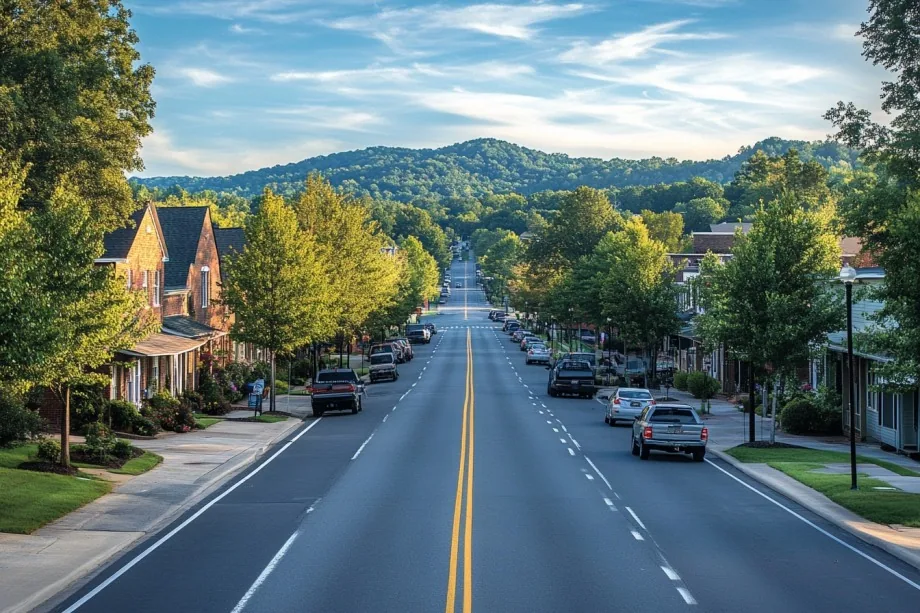
A retail roof problem has a second boundary below the membrane: the entrance, service door, or sales area that still needs to operate. Clarksville's Exit 4 Retail District is a broad commercial area in the Interstate 24 setting, with Wilma Rudolph Boulevard serving as a main thoroughfare. That context helps orient dispatch, but the store manager and property contact still confirm the actual building, gate, deliveries, and hours. We walk the roof, mark where work can occur, and set a handback that keeps customer and staff routes in the plan.
A ceiling stain near a sales floor or kitchen may lead to a drain, seam, curb, or wall transition some distance away. We compare the interior report with the roof plan, inspect the likely water path, and note what is visible before choosing a repair. On a low-slope assembly, we check membrane laps, drain bowls, overflow points, penetrations, and edge termination. On metal, we inspect panel seams, fasteners, closures, and flashing. A commercial roof inspection records the finding by zone rather than by the room where the water appeared.
For a multi-tenant property, entrances, signage, loading, and fire lanes may limit where a lift or materials can go. We ask the owner to identify occupied areas and delivery periods, then confirm those limits at the building. An aerial overview can show broad conditions where it is safe and useful, but close-up seam, flashing, and drain checks still require a suitable hands-on review. The final record distinguishes observed damage from a suspected path that needs testing.
Clarksville receives rainfall through the year. May averages 5.50 inches, its highest monthly amount, and November averages 4.31 inches. Summer remains warm, which can affect surface preparation and how long materials need before exposure. We use the actual forecast and roof conditions to set the day's open area. The crew should have time to prepare the substrate, complete the repair detail, inspect the tie-in, and reach the dry-in point before the work zone is left.
Store hours add another clock. A roof phase may need to avoid a delivery window, protect a kitchen exhaust path, or keep an entrance accessible. We set the lift, debris route, and restricted zone with the site contact, then communicate any change before work begins. If water is entering now, an emergency dry-in can stabilize the opening while the permanent repair is scoped. The temporary boundary and next review remain documented separately.
A single puncture or failed flashing can be a contained repair when the surrounding material is sound. Several recurring leaks, wet insulation, deteriorated roof edges, or failure across multiple sections may require a wider review. We note the affected area, what must be removed, and how replacement material will tie into the existing assembly. If concealed damage could change the quantity, the scope identifies the test and approval point before removal expands. A repair proposal stays tied to the confirmed boundary.
When a retail building needs broader work, compare access, removal, staging, and closure impacts alongside the roof condition. A replacement plan can split a large field into phases with daily close-in points. A recover evaluation considers existing layers, attachment, drainage, and edge height before a new system is added. If the owner is weighing surface restoration, a coating review first checks whether the assembly and substrate are suitable for that path.
For an occupied shop, the decision also includes which doors can close, how merchandise or kitchen equipment is protected, and where customers can be redirected. The scope should identify noise-producing removal, crane or lift time, temporary barriers, and the path for debris so a roof phase does not create an unmanaged ground-level problem. We place those controls beside the roof details and sequence, then state when each area can reopen. If an unplanned wet section appears after removal, work pauses at the agreed limit until the owner reviews the condition and approves a revised boundary.
The Exit 4 district and Wilma Rudolph Boulevard give crews a location reference, not a site access plan. We confirm the specific entrance, loading door, lift position, overhead lines, staging area, and fire lanes with the property manager. If work is above an open entrance, we coordinate a protected route or a time-limited closure before the roof zone is opened. The property team identifies where customers can enter, where staff can pass, and which operations cannot stop.
Clarksville also has North Park, East Park, and South Park as distinct employment areas, each with building-specific access. A retail property does not follow an industrial delivery plan, even when the same crews serve the market. We record the approved sequence and return condition for each phase. An occupied-building sequence can define barriers, interior protection, noise timing, and who accepts the daily handback when trading continues below.
That depends on access, temperature, material preparation, and the time available to reach a safe close-in point. We compare those requirements with the operating schedule, then name which zones can be completed in each shift and what the site contact needs to protect.
We confirm the door, customer route, overhead work, and any temporary restriction with the property contact. If a protected path or short closure is needed, we set it before the roof is opened and identify when the area can return to use.
Not always. Water can move along insulation or deck before appearing inside. We compare the room report with roof seams, drains, curbs, and transitions, then identify a test if the path remains uncertain.
Repeated leaks, moisture across multiple zones, unstable edge details, or repairs without a sound tie-in can justify a larger scope. We map confirmed conditions and any test needed before comparing repair, recover, and replacement.
The manager should know what roof zone was completed, whether drainage and access were restored, what temporary protection remains, and who owns the next check. We include photographs and any remaining limitation with the work record.
Before a work zone returns, we check the repair detail, remove loose debris, confirm drainage remains open, and review any temporary protection still in place. Closeout photographs show the repaired roof area and the surrounding condition. The file records material, tie-in, limits, and any concealed question left for another inspection. Store operations receive a clear note about an entrance, loading area, or roof access restriction that remains active.
Wilma Rudolph Boulevard, Exit 4, and Interstate 24 are broad area references; the roof record belongs to the actual property. If the same owner manages more locations, a portfolio roof record can keep each address and roof zone separate while using consistent inspection fields. A North Park repair plan or East Park inspection may share that record structure, but no condition transfers from one building to another. The next visit starts with the completed area and open item, not a guess about what the crew reached. We also review the service entrance, customer path, and delivery access with the manager before barriers are removed. Any remaining restriction has an owner and a review time.
Share the building plan, operating hours, delivery windows, and active leak reports. We will map the roof condition and coordinate a repair sequence with a defined customer route and handback.