
The midsummer climate record puts Clarksville's monthly mean at 79.4 degrees in July and 78.7 degrees in August, with rain returning through the calendar. Those conditions make membrane, flashing, and drainage choices part of one roof decision. We begin with the deck, existing assembly, edge details, equipment, and water path. A system that fits a warehouse near North Park may not fit an occupied office along Rossview Road if access, loading, or interior conditions differ. The field condition decides where comparison starts.
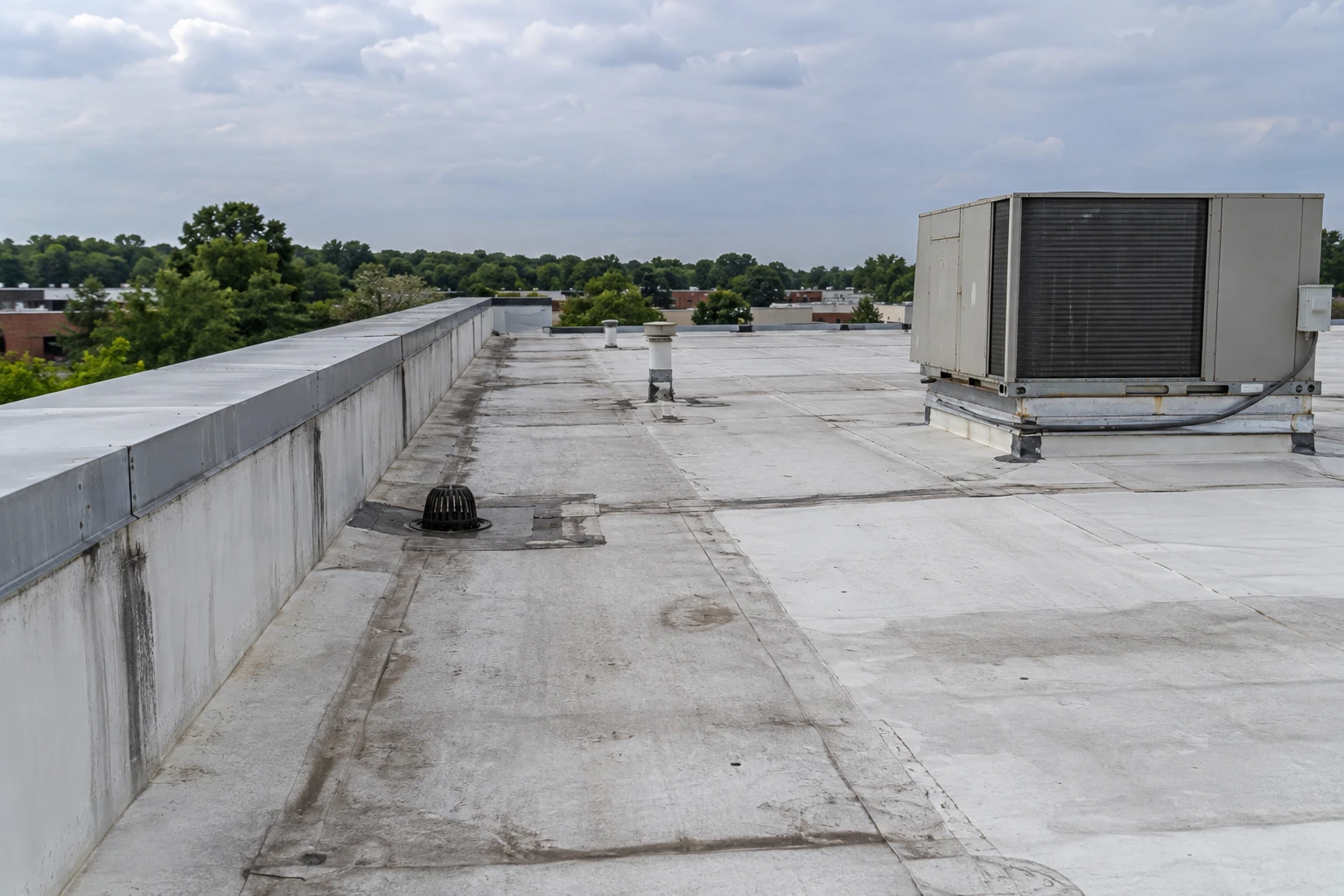
We record what is visible before comparing options: membrane type, seams, prior patches, insulation condition, edge attachment, and penetrations. A TPO assembly or PVC roof needs compatible details at curbs, drains, and terminations. EPDM and modified bitumen bring different seam and repair considerations. The roof walk maps each observation to a zone instead of treating the surface as a single material.
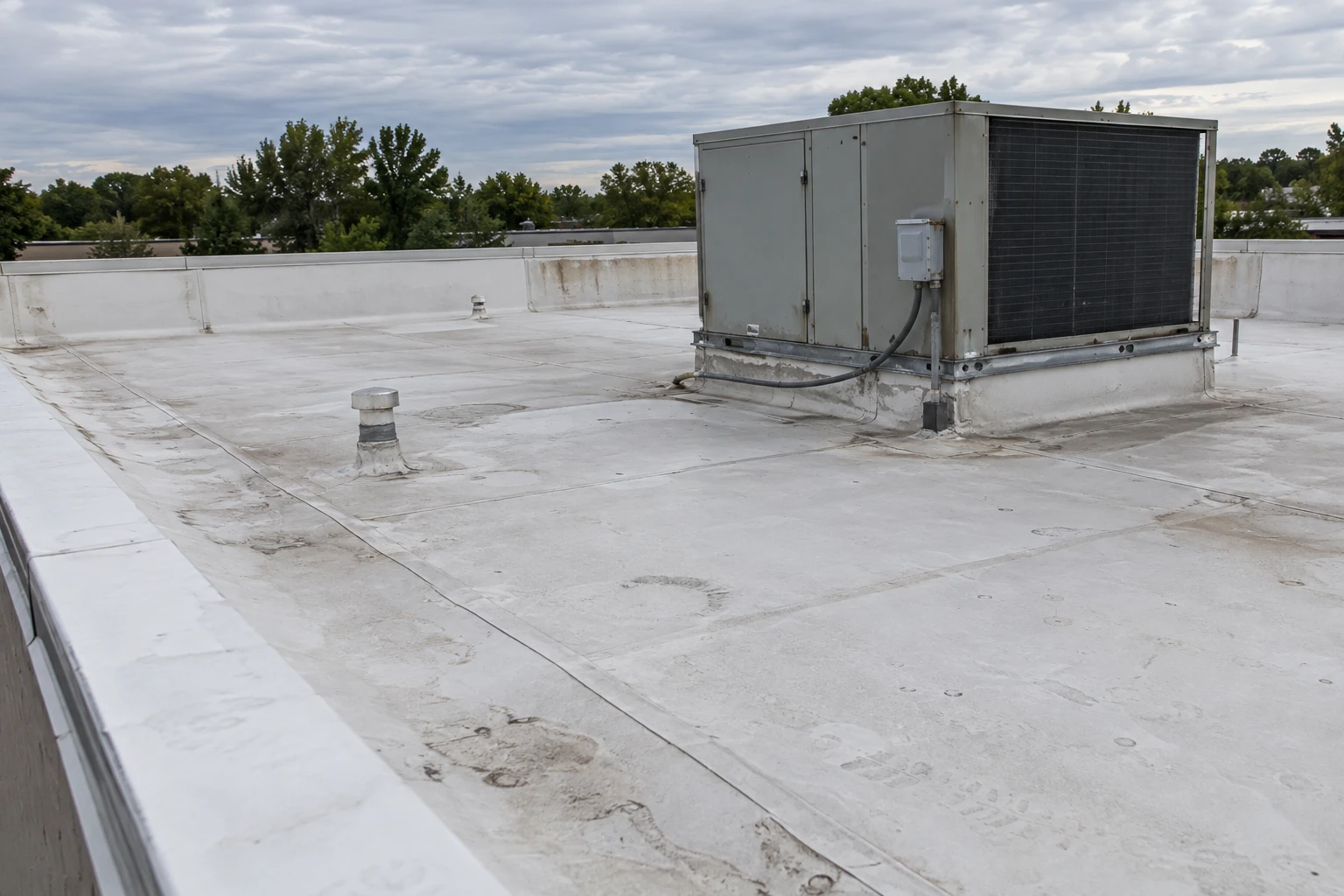
Rainfall averages 5.50 inches in May, the highest monthly value in the Clarksville normals, with 4.31 inches in November. That pattern supports clear drainage paths and a defined close-in point, not a prediction about a particular leak. A silicone coating or acrylic coating requires a dry, prepared substrate and product-specific application conditions. We check forecast, surface state, and the area the crew can complete before the shift ends.
Metal roofs move with temperature, so panel length, clips, fasteners, laps, and perimeter transitions matter together. A standing-seam system is reviewed at its clips and penetrations; a metal retrofit also has to meet the existing roof and edge condition. Where water ponds or enters at a seam, a roof inspection can document the detail before selecting a repair.
A system name does not determine whether the roof can stay in place. We review moisture, deck support, attachment, drainage, code questions, and the building's operating schedule. A bounded defect may fit a repair; multiple wet zones or recurring edge failures can support a broader assessment. Near North Park, we coordinate material staging with property access rather than assuming an industrial map identifies the gate. Each recommendation names the condition, option, and evidence still needed.
The useful comparison is a roof plan with zones, observed details, transition points, and an approved work boundary. We show how the selected assembly handles drains, curbs, edges, and tie-ins, then identify what would change the scope. Schedule a roof walk with the available records and facility hours. The next decision can then reflect the roof that is present and the work the building can support.
The membrane matters, but deck, attachment, insulation, drainage, edge details, and penetrations can change which assembly fits. We record those conditions before comparing a repair, recover, or replacement.
A coating protects a prepared surface; it does not correct a slope or blocked outlet by itself. We trace the water path and determine whether drainage work or a different roof scope is needed first.
Substrate moisture, temperature, forecast, access, and the selected product's application limits all matter. We set the work zone and dry-in point to what can be prepared and protected in that window.
The comparison should show existing layers, removal assumptions, insulation, edge and curb details, drainage, access, and any testing that could change the scope. We keep confirmed work separate from uncertain conditions.