A repair should close the defect and explain what still needs watching. An EF3 tornado crossed the Clarksville area in December 2023, and hail reports followed in May 2024; neither event tells us what happened to a particular roof. We inspect the membrane, seams, flashings, edges, drains, and interior reports, then connect each repair to an observed condition. That matters for occupied buildings where an active leak may interrupt receiving, clinical rooms, office equipment, or production. Along Ashland City Road and across the multi-property North Park district, access and work hours differ by building. Our scope starts with the roof finding, sets a safe repair sequence, and identifies the point where the facility can take the area back.
Water can travel under a membrane and appear well away from the entry point. We follow the interior symptom toward roof transitions, inspect laps and seams, and check penetrations, curbs, wall terminations, drains, and edge metal. A repair at the stain without tracing the path can leave the actual opening in service. We photograph the suspected entry and any related damage, then identify what is confirmed, what needs a test opening, and what remains outside the immediate repair.
The December 2023 tornado crossed the Clarksville area, and hail reports followed in May 2024. Those events make wind and impact checks relevant during a roof walk, but observed cuts, punctures, displaced metal, or failed seams determine the repair. For a membrane split, we identify the system before selecting compatible repair material. For a loose termination, we inspect the substrate and securement rather than applying surface sealant as a substitute for attachment. Compare repair of a failed seam with a membrane puncture repair when the damage is localized.
A useful proposal names the affected roof area, the detail to be opened or prepared, the material and tie-in, and the condition that may change the work. We mark each item as patch, repair, or further investigation. If insulation is wet, we identify whether it can be isolated or whether a larger section should be removed. If a deck feels soft, we do not cover it before the owner sees the finding and approves the next step. That keeps an unknown condition from being buried under a finished patch.
The Clarksville jurisdiction applies its 2018 International Building Code and 2018 International Existing Building Code to building work. Where a repair changes an assembly detail or requires a permit, the project team confirms the applicable requirement with the jurisdiction. Small maintenance work and a larger roof alteration are not the same scope. We document the proposed limits and any design question so the facilities lead can decide without confusing a repair with a replacement. If repeated repairs cluster along the same drainage path, compare the repair history with a photographic condition report or a planned maintenance visit before budgeting the next season. A repair log is useful when roof zones have different ages or service histories. We map repeated work by location and detail, then separate a seam issue from a drain or penetration problem nearby. The owner sees which items are complete, which are monitoring points, and which need a broader project allowance. That record gives the next inspection a defined starting point.
Before a crew opens a repair area, the facility contact identifies interior rooms, production equipment, stored goods, and routes that need protection. We confirm roof access, ladder or lift placement, and any shutdown or escort needed around rooftop equipment. The repair boundary should be small enough to complete and dry in safely within the agreed weather window. When water is active, we make the temporary protection and the permanent repair separate steps, and tell the contact what remains in place overnight.
Clarksville averages 5.50 inches of precipitation in May, its highest monthly total, and rainfall occurs in other months as well. The forecast therefore influences surface preparation, adhesive or sealant cure, and the size of an open area. A short dry-in point is safer than an ambitious repair zone left exposed at the end of a shift. For buildings near Rossview Road, delivery and parking arrangements may differ from a property in the older central grid; we confirm them with the facility rather than assuming a standard setup. An active leak response may call for interior protection first, followed by a permanent fix when the roof can be prepared correctly.
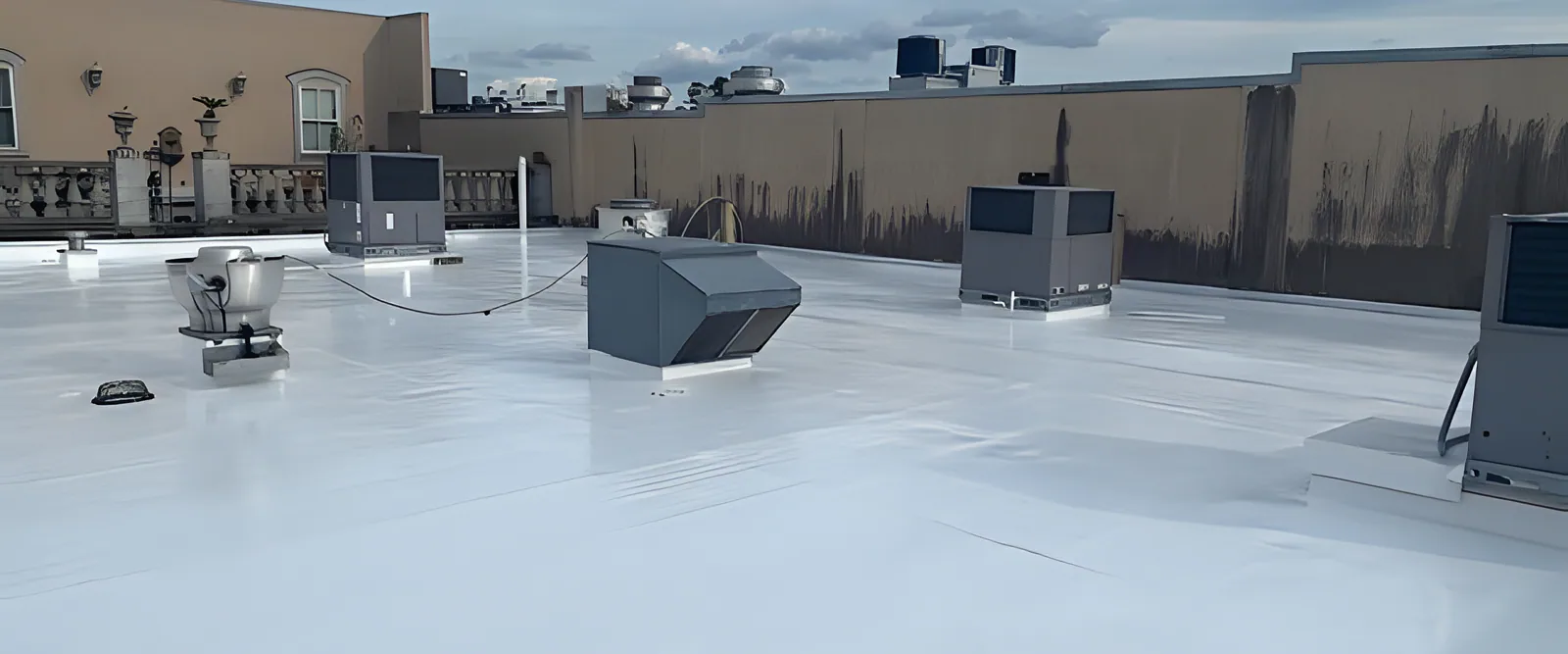
After the repair, we photograph the completed detail and describe the repair limits, materials used, and any adjacent condition that should be checked later. A short water test may be appropriate for some details when the system and weather allow it, but no test should put the building at risk or be read as proof that unseen areas are sound. The closeout record gives the maintenance team a point of comparison for later inspections and helps locate the repair if a separate issue develops.
The next inspection can check whether the repair edge remains bonded, whether nearby seams have moved, and whether drains are clearing. If a storm prompted the call, an exposure record can also help the owner organize photographs and dates without treating weather history as proof of roof damage. For broader review, we can coordinate a hands-on roof inspection and discuss storm-related repair findings separately from ordinary wear. Schedule work on a Clarksville property near North Park or the Ashland City Road corridor with the access route and occupied schedule ready. We will return a clear repair scope and handback note.
Water may follow a deck slope, insulation joint, framing member, or service penetration before reaching the interior. We compare the stain location with roof seams, curbs, drains, and wall transitions, then inspect likely paths. A selective opening can resolve uncertainty when surface evidence is not enough to identify the entry.
The scope identifies the location and observed defect, preparation, compatible repair material, tie-in method, access needs, and dry-in boundary. It also separates the approved fix from any hidden condition that would require a change. Photographs before and after help the facility team see the repair limits and track that location later.
We plan the work zone with the facility contact, account for people and equipment below, and coordinate access with loading or production hours. If the repair needs a noisy operation, equipment shutdown, or interior protection, that is set before work starts. Weather and safe completion determine the size of the area opened that day.
No. We inspect the affected roof and record the observed damage, then distinguish isolated repair from conditions that extend through multiple areas. Hail or wind history is useful context, not a condition report. The recommendation follows the membrane, seams, attachment, edge details, and any confirmed moisture below the surface.
The closeout should show the repair location, work completed, materials and tie-in, photographs, and any follow-up item. We also note the area returned to service and what the next inspection should revisit. If a temporary measure remains, the handback states its limits and who will coordinate the permanent work.
Arrange a roof walk in Clarksville. We will document the defect, coordinate the work zone with facility operations, and return a repair sequence with a defined handback.