
Roof work in Clarksville has to fit the operation below it. A distribution building near North Park, a school near downtown, and a clinic serving the Exit 4 retail district each release different access, noise, and staging windows. We walk the roof, map the affected areas, and set a work boundary with the facility contact. The recommendation accounts for the membrane and the shift that keeps the building running.
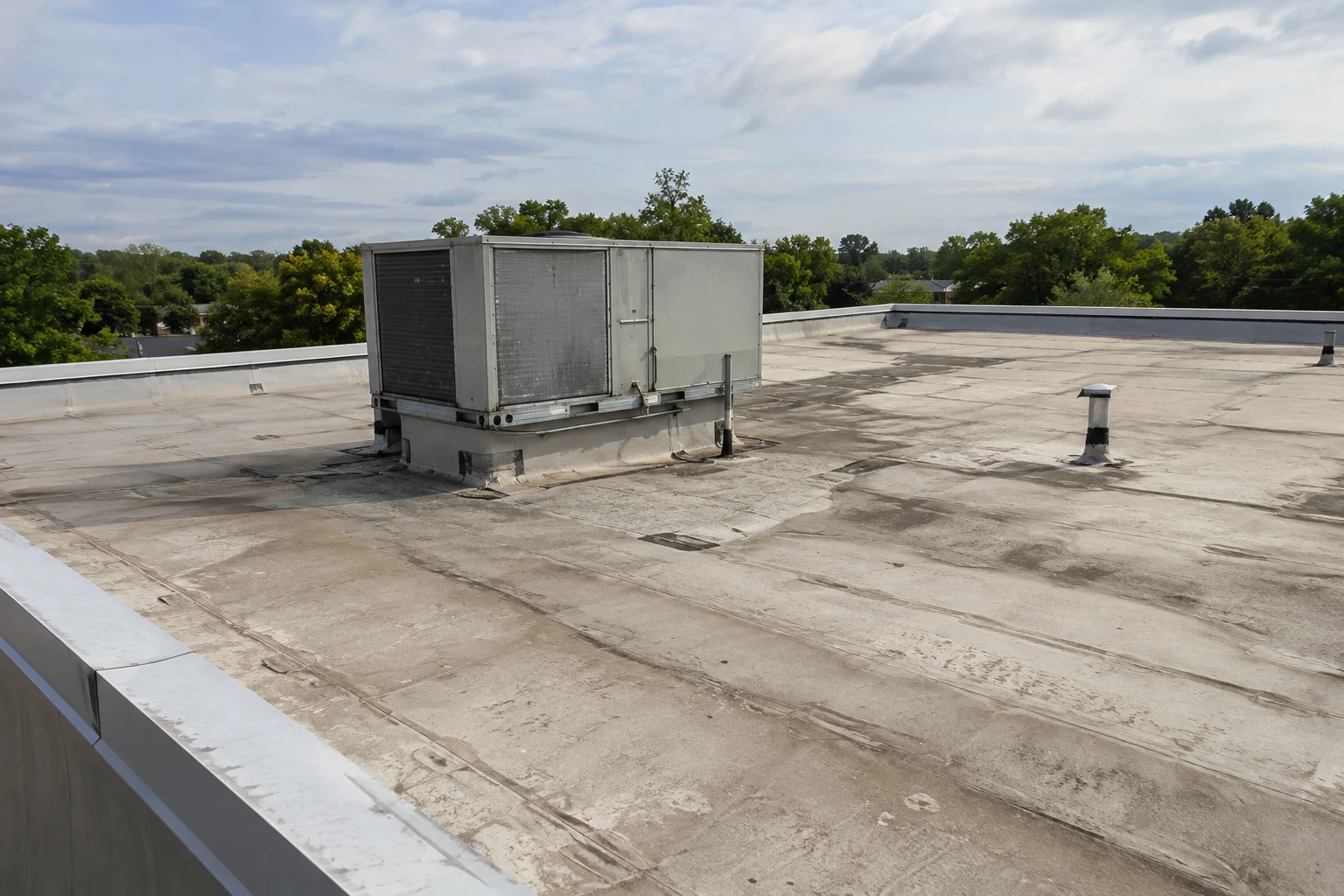
Clarksville's employer base includes education, fulfillment and distribution, HVAC manufacturing, healthcare, tire production, printing, and appliance manufacturing. That range brings different roof constraints: dock schedules, clean interior zones, process equipment, classrooms, and public entrances. We coordinate an industrial roof scope around equipment and production access, while healthcare roofing needs a clear route that avoids patient-facing areas. The site contact identifies the hours and spaces the crew can use.
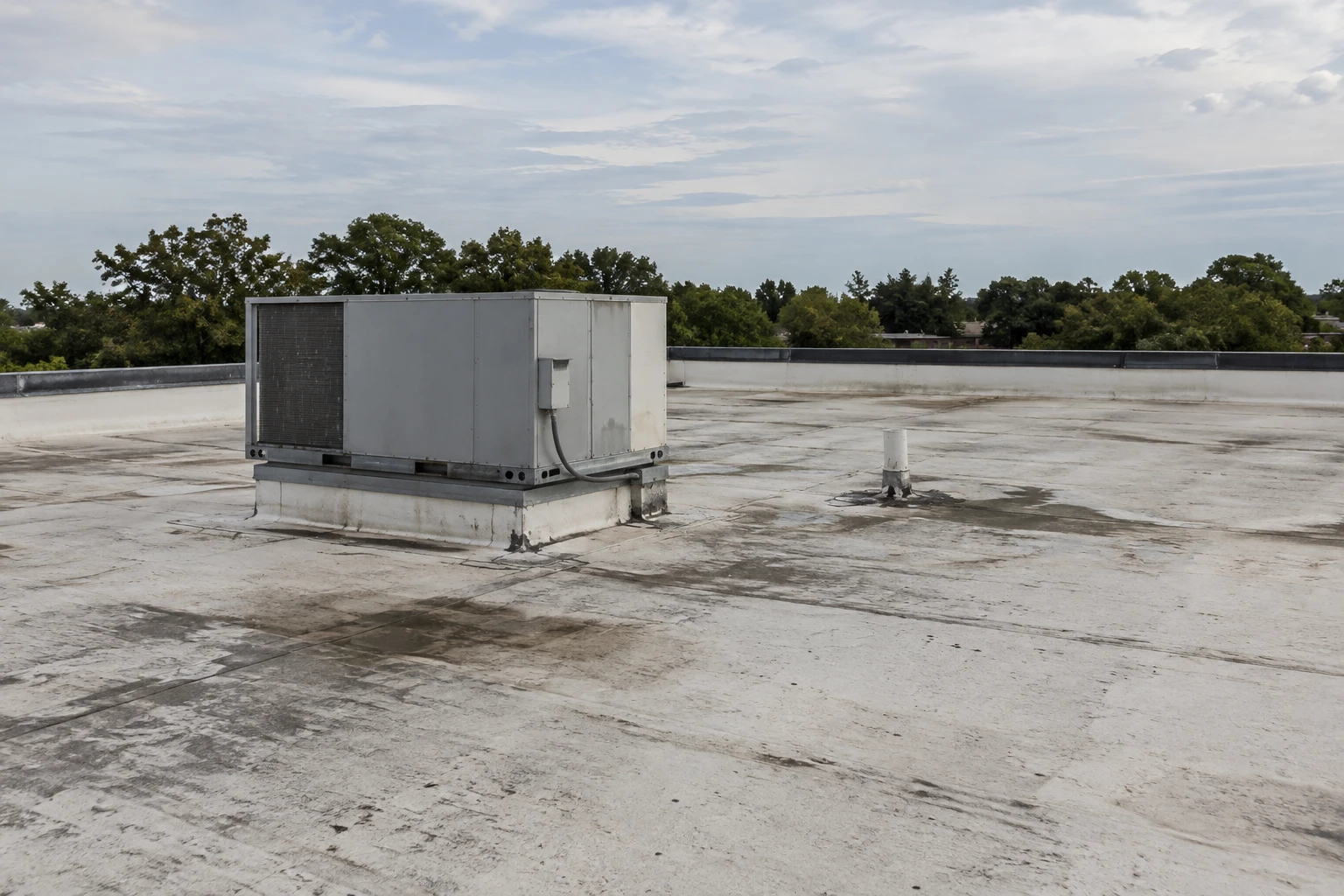
A roof report is more useful when every photograph ties to a drain, seam, curb, edge, or interior condition. We mark the affected zone and separate active leakage from maintenance and testing needs. For a property manager overseeing several tenants, multi-tenant roof coordination can keep access and notices tied to each building. A condition report then gives the owner a record for repair approval and future comparison.
May has the highest average monthly precipitation in Clarksville's 1991 to 2020 normals, with rainfall also recorded in November. We check drains, overflow paths, transitions, and low areas as a connected system. On a warehouse roof, dock doors and stored inventory can make an interior leak especially disruptive; a ponding-water repair starts by finding why water stays. The field evidence determines whether clearing, repair, or broader drainage work fits.
The December 2023 tornado and May 2024 hail reports give local facilities reason to document roof condition after severe weather. They do not establish damage at a particular property. We inspect accessible surfaces, edges, and penetrations, secure openings when needed, then record what needs a permanent repair or further testing. Emergency roof repair can protect an active area while storm-damage repair documents the affected details for the owner.
On an occupied project, the sequence is part of the roof scope. We identify delivery routes, protected equipment, daily dry-in points, and the handback needed before the next shift. For a school district roof, that may mean a defined work area and a scheduled return; a logistics facility may need receiving lanes kept clear. Near North Park, the employment map sets broad context, while the property determines its own gate and access plan.
We confirm equipment zones, noise limits, access, and the hours the facility can release. The crew works within a marked area and closes the roof at an agreed dry-in point.
Each roof needs its own marked findings, photographs, priority, and next action. We keep confirmed conditions separate from recommendations that depend on testing or access.
We can document visible roof conditions, repair areas, and relevant photographs for the owner. Any coverage decision belongs to the policy and carrier review, not the roof inspection.
The facility contact sets the notification and access plan with us. We define the work zone, delivery path, and daily handback before activity shifts below the roof.