After a Clarksville storm, the first roof decision is which opening needs protection and what can wait for a full inspection. The December 2023 tornado and May 2024 hail reports put wind and impact on the local checklist, but the building's own roof decides the repair. We confirm safe access, photograph visible conditions, and set a temporary dry-in point. A warehouse in South Park and a retail property by Exit 4 need separate work zones and handbacks.
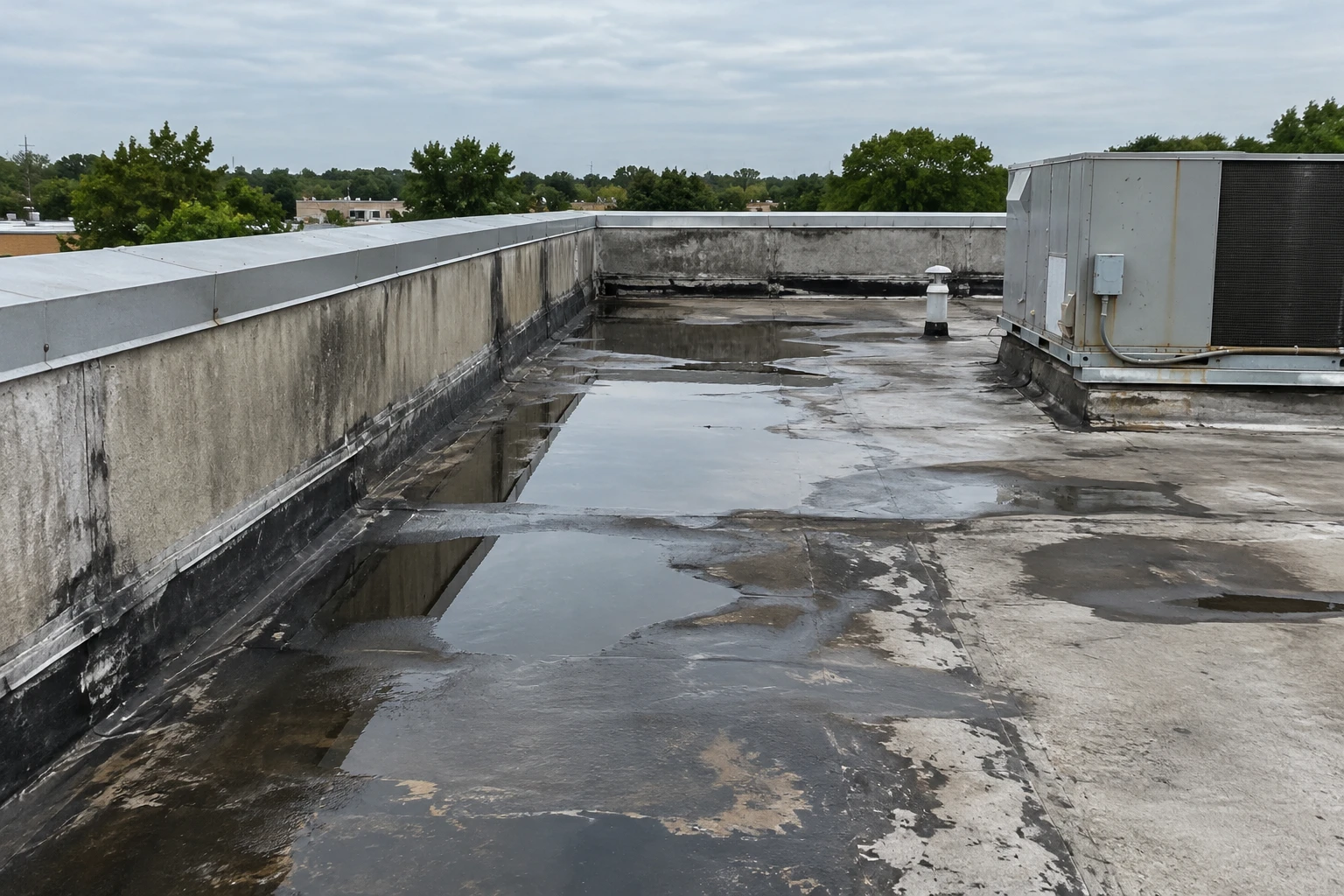
Water entering around a puncture, lifted edge, or displaced flashing can reach insulation, deck, equipment, and inventory. We trace the path from the interior report to the roof detail, then secure the exposed area using a method suited to the assembly and weather window. Emergency roof repair establishes immediate protection while we mark what remains for permanent work. The site contact sets access and any process or tenant areas that must stay clear.
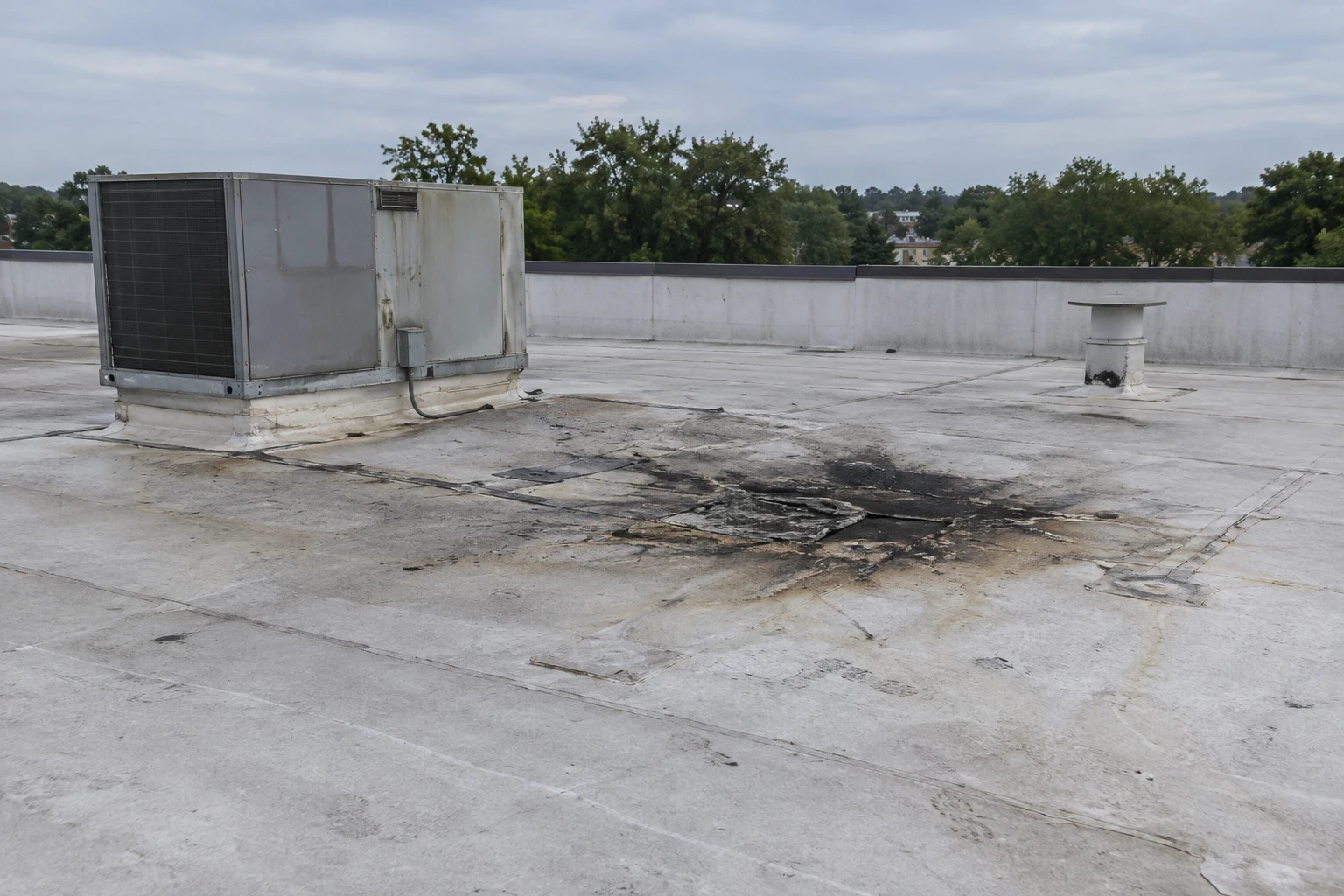
Wind can disturb perimeter details, metal panels, coping, and rooftop attachments; impact can mark surfacing or damage a penetration. A wind-damage roof repair or hail review follows the observed pattern and records the areas checked. When water remains after rainfall, a ponding-water evaluation traces the outlet and low points before recommending repair. Each finding is tied to a roof location.
Clarksville's long-term table assigns 5.50 inches of average precipitation to May and 4.31 inches to November. We plan a repair around substrate condition, forecast, and how much roof area can be closed in before the crew leaves. A roof inspection checks seams, drains, curbs, edges, and prior patches; a storm-damage scope records the selected repair and supporting photographs.
We define the damaged section, compatible materials, tie-in, access route, and daily closeout before the permanent repair begins. A seam repair needs sound adjoining membrane; a flashing repair has to reconnect the wall or curb detail without trapping water. If multiple zones or concealed wet areas change the scope, we identify the test or approval needed before expanding work. Near South Park, the broad industrial map helps with area context, not a specific property's condition.
At the end of each shift, the facility should know what was stabilized, what was permanently repaired, and which roof areas remain restricted. We review photographs and work boundaries with the site contact, then list any follow-up inspection or maintenance item separately. That record helps a property team coordinate interior cleanup, inventory decisions, or a claim discussion without presenting a visible storm mark as proof of hidden damage. The next step can be scheduled from the condition actually found.
Tell us where water appears, when it started, what rooms or equipment are affected, and how roof access works. We use those details to locate the likely area and set a safe response.
A storm report does not determine the condition of an individual roof. We inspect accessible surfaces and details, document observed damage, and separate a repair need from any broader assembly concern.
Temporary stabilization is selected for the opening and conditions found, then its limits and the permanent follow-up are recorded. We set a return step so protection is not mistaken for completed repair.
It should identify the roof area, repair performed, photographs, access limits, and any work still needed. We keep those findings distinct from decisions made by an insurer or another reviewer.