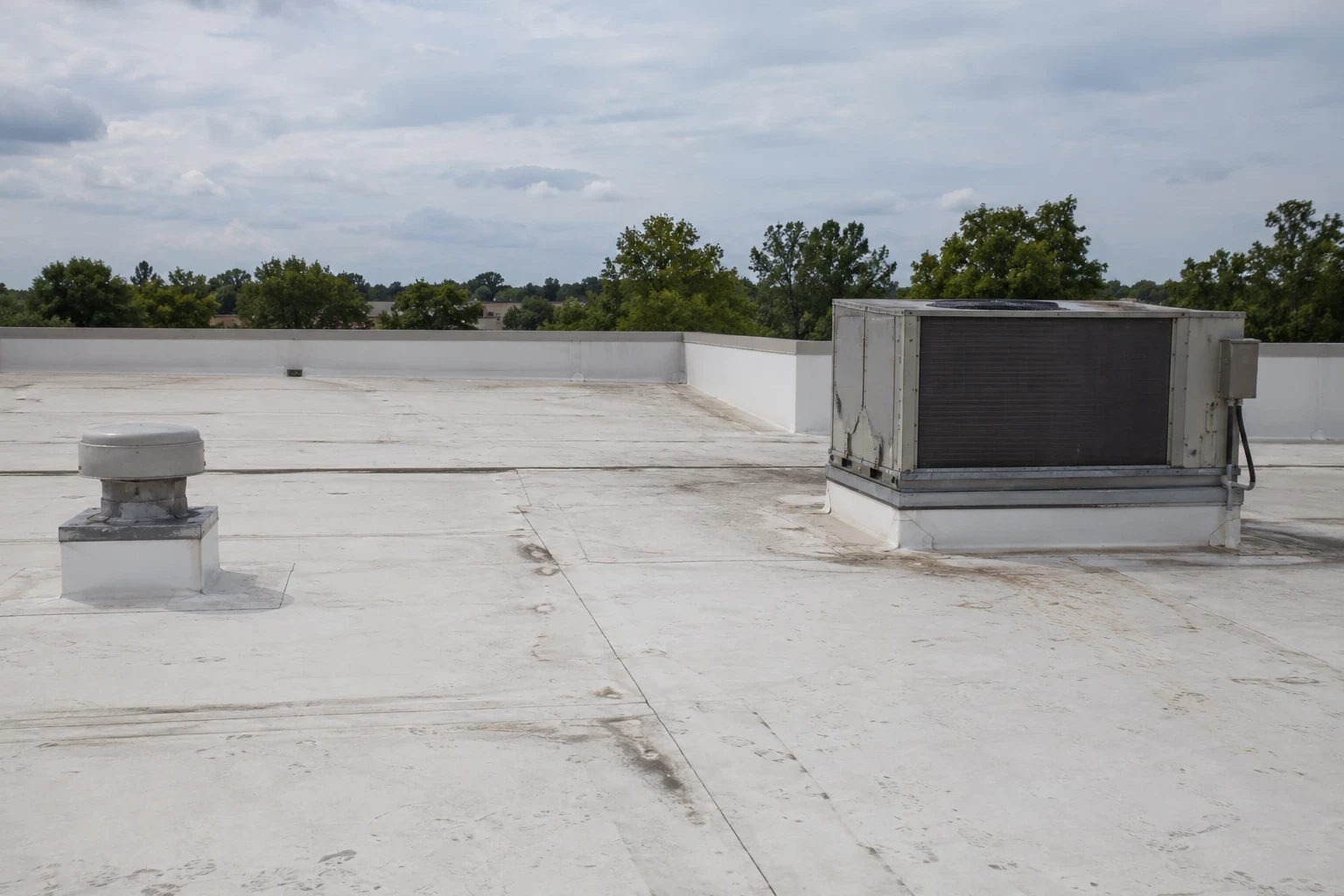
Repeated rain and severe wind records make a TPO roof worth reviewing at its seams, edges, and drain paths before a repair window closes. In Clarksville, TN, we inspect the installed membrane, check how it is attached, and mark each condition by roof zone. The 2023 tornado crossed the Clarksville area, while May 2024 hail reports included observations in town; neither event identifies damage at a particular building. A roof walk does. For a warehouse among the multi-property North Park employment area or an office near Wilma Rudolph Boulevard, the facility receives a documented condition line, an access plan, and a clear next action.
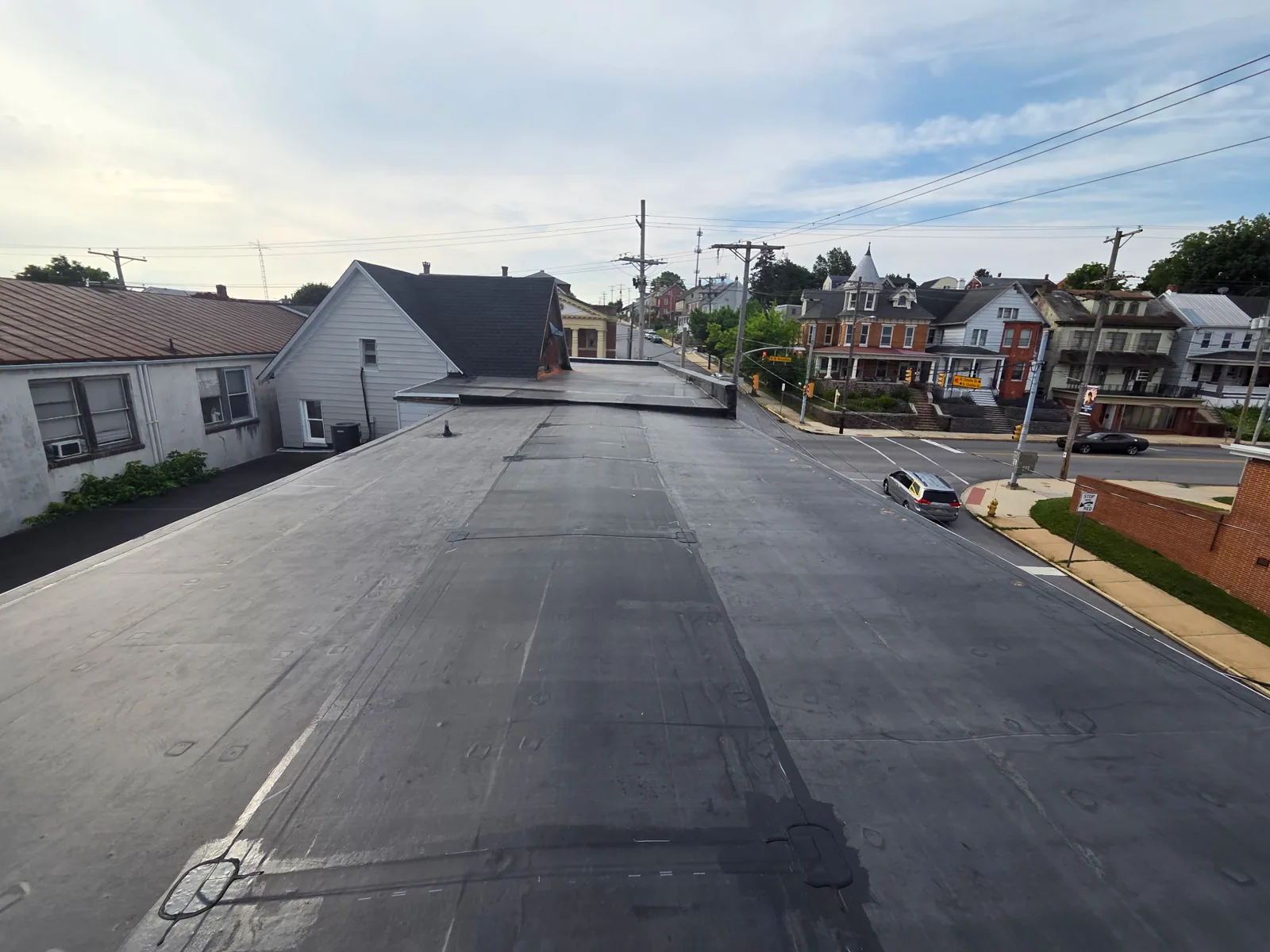
TPO performance depends on welded laps and transitions that remain closed as the roof expands, contracts, and moves under service traffic. We inspect seams for separation, fishmouths, contamination, or repairs that no longer bond to the surrounding sheet. At curbs, parapets, and penetrations, we look for changes in plane, loose termination, and water paths that can reach the insulation below. The report separates a confirmed opening from a condition that needs a probe or test cut.
Wind checks start at the perimeter, corners, and changes in roof height, then continue across the field attachment pattern. Clarksville's tornado record makes those observations relevant, but it does not establish that a particular membrane lifted. We photograph the edge metal, perimeter securement, and any visible movement, then compare the findings with available project records. A wind-related roof review can map a defined area when the exposure record and field evidence point to a repair question. A small repair still needs a sound tie-in. We remove contamination and unsound material at the boundary, prepare the sheet for the selected system, then weld a compatible patch with rounded corners where appropriate. After cooling, a probe checks the weld edge without cutting the membrane. We photograph the result and note any nearby seam or penetration excluded from that repair. The next inspection can revisit the same point instead of searching the entire roof.
A TPO field can shed water only when drains, scuppers, and the slope leading to them remain clear. We trace the drainage path from higher sections, note low areas and debris, and inspect the membrane around drain bowls and overflow points. A blocked outlet, a damaged clamping ring, and a depression in the deck call for different work. An outlet and scupper assessment records the roof-side condition before the repair limit is chosen.
Clarksville normals show precipitation spread across the year, with May averaging more than five inches and November also receiving several inches. That local pattern makes a safe weather window and a reliable dry-in point part of the scope, not a calendar assumption. We set the daily open area to what the crew can protect and close before conditions shift. The facility contact can then coordinate receiving hours or tenant circulation without leaving an exposed seam above an occupied zone.
A localized weld repair can fit when the surrounding sheet is clean, stable, and compatible with the repair material. We identify the membrane and document preparation, reinforcement, seam length, and the tie-in to existing work. Where wet insulation, widespread seam failure, or uncertain attachment is present, a small patch may not resolve the condition. A PVC membrane comparison or KEE system review can help frame alternatives after the existing assembly and service requirements are established.
Clarksville's adopted 2018 International Building Code and Existing Building Code may be relevant when an assembly changes or permit review is needed. The project team confirms the applicable path with local officials; a roof inspection does not decide code compliance. For replacement planning, we document the current membrane, insulation, deck condition where visible, edge details, and equipment coordination. A replacement scope can then distinguish known removal from a concealed condition that needs approval when exposed.
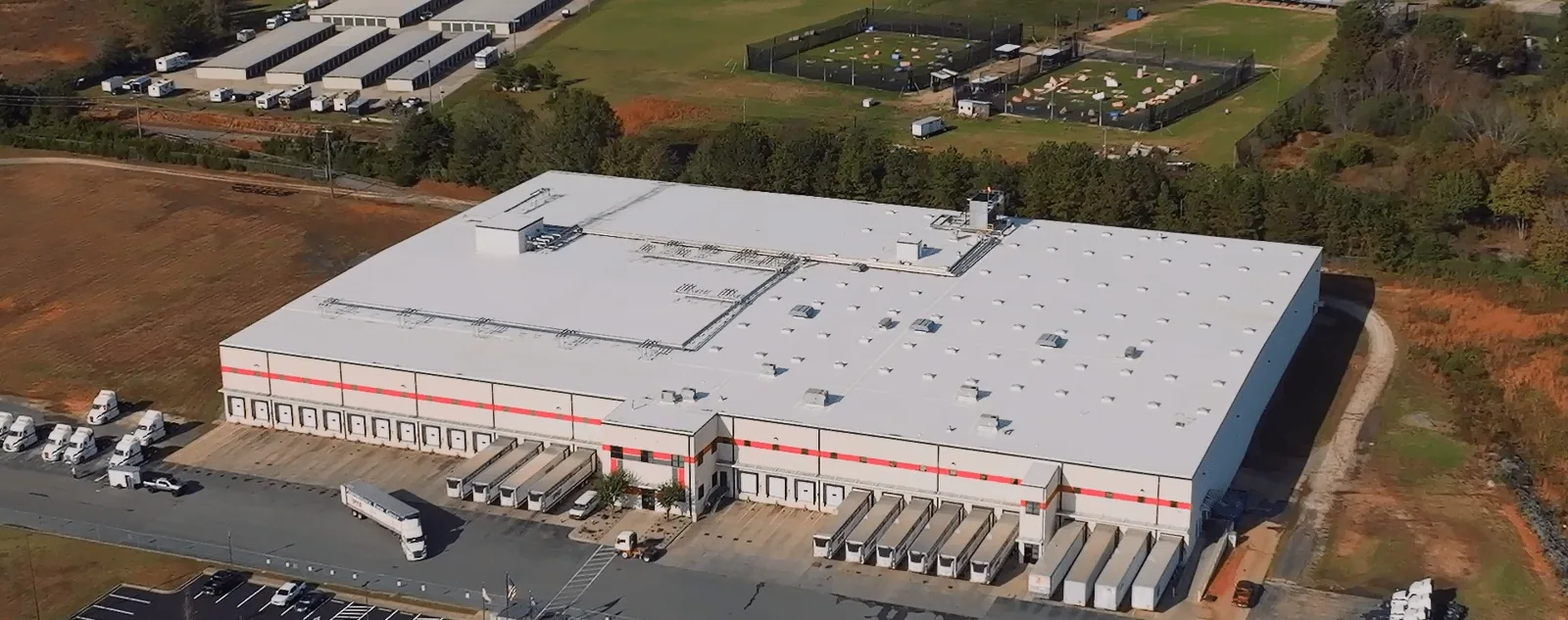
Preparation, welding, adhesive selection, and testing vary by TPO system and repair location. We define the work zone, protect materials from moisture, and keep the repair surface suitable for the specified installation. A seam probe helps locate a failed weld, while a test patch can show whether a repair method bonds to the installed sheet. The written sequence names the work area, access route, expected close-in point, and who accepts the daily handback.
North Park is a district-scale employment area shown with I-24, roads, and rail on the local industrial map. Those connections are context for deliveries, not permission to stage at a property. We verify the actual entrance, lift position, roof access, and loading rules with the facility. If older roof layers or moisture are uncertain, a hands-on inspection and photographic condition record can frame the next decision. For a Clarksville property near North Park, the access plan is set to the specific building and its occupied schedule.
A seam check starts with the weld edge, nearby sheet condition, and any interior report below it. We probe accessible laps, photograph open or contaminated areas, and identify where a test cut or compatible repair sample would change the scope. The report names the roof zone and distinguishes a confirmed opening from a suspected path.
No. Regional weather records explain why we inspect perimeter attachment and sheet condition, but they do not show what occurred at a specific building. We document visible punctures, displaced edges, lifted seams, and interior reports, then tie any repair recommendation to the observed condition.
Surface dryness, temperature, wind, access, and the repair method all affect a safe work window. We limit the open zone to what can be prepared, welded, inspected, and protected before the shift ends. The facility contact receives the close-in point and any access change before work begins.
Repeated seam failures, broad wet insulation, unstable attachment, or repairs crossing several roof zones can justify a larger review. We map confirmed findings and separate them from concealed conditions. The owner can compare localized repair with recover or replacement after the assembly and removal limits are understood.
Keep photographs, repair location, seam length, material and preparation notes, and any test opening or excluded area together. Record who accepted the daily handback and what the next inspection should revisit. That exposure record gives maintenance staff a concrete point of comparison.
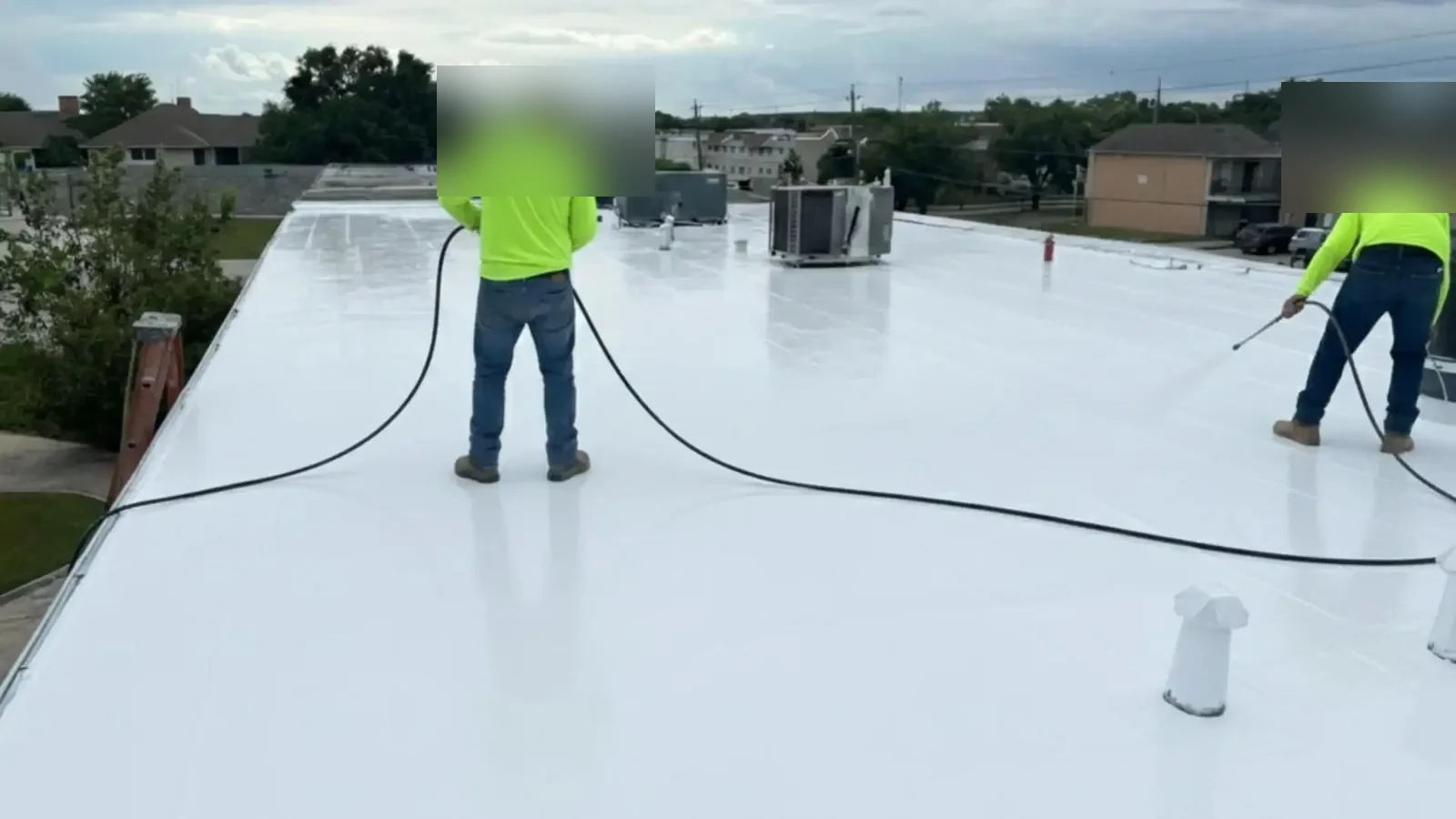
Closeout should identify the TPO section repaired, seam or transition involved, materials used, photographs, and any limit that remains. If a test opening was made, record where it occurred and how the assembly was restored. Maintenance staff can compare the same seam or drain at the next inspection instead of relying on a general label such as good or poor. A maintenance visit can revisit the mapped details and clear drainage paths before the next project is planned.
Deferring an open weld or loose termination can allow water to travel beneath the sheet and make the repair boundary harder to confirm. The next step may still be a local repair, but the owner should have a record of the affected zone, interior reports, and any unresolved moisture question. For active water entry, our emergency response is available around the clock, including weekends and holidays; we first protect the building, then document the permanent scope when the roof can be prepared safely.
Share the roof plan, leak history, access limits, and occupied hours. We will inspect the membrane details, mark the repair boundary, and return a written sequence with a defined dry-in point.