Summer heat and year-round rain put modified-bitumen surfacing, laps, and drainage on the same inspection list in Clarksville, TN. We identify whether the roof uses SBS or APP material where records and field details support that conclusion, then inspect seams, flashings, drains, and prior repairs. The city’s employment map shows several broad industrial districts, including South Park, while Warfield Boulevard is part of the main roadway network. Those places frame the operating context, but the roof section and occupied schedule determine the work boundary at each building.
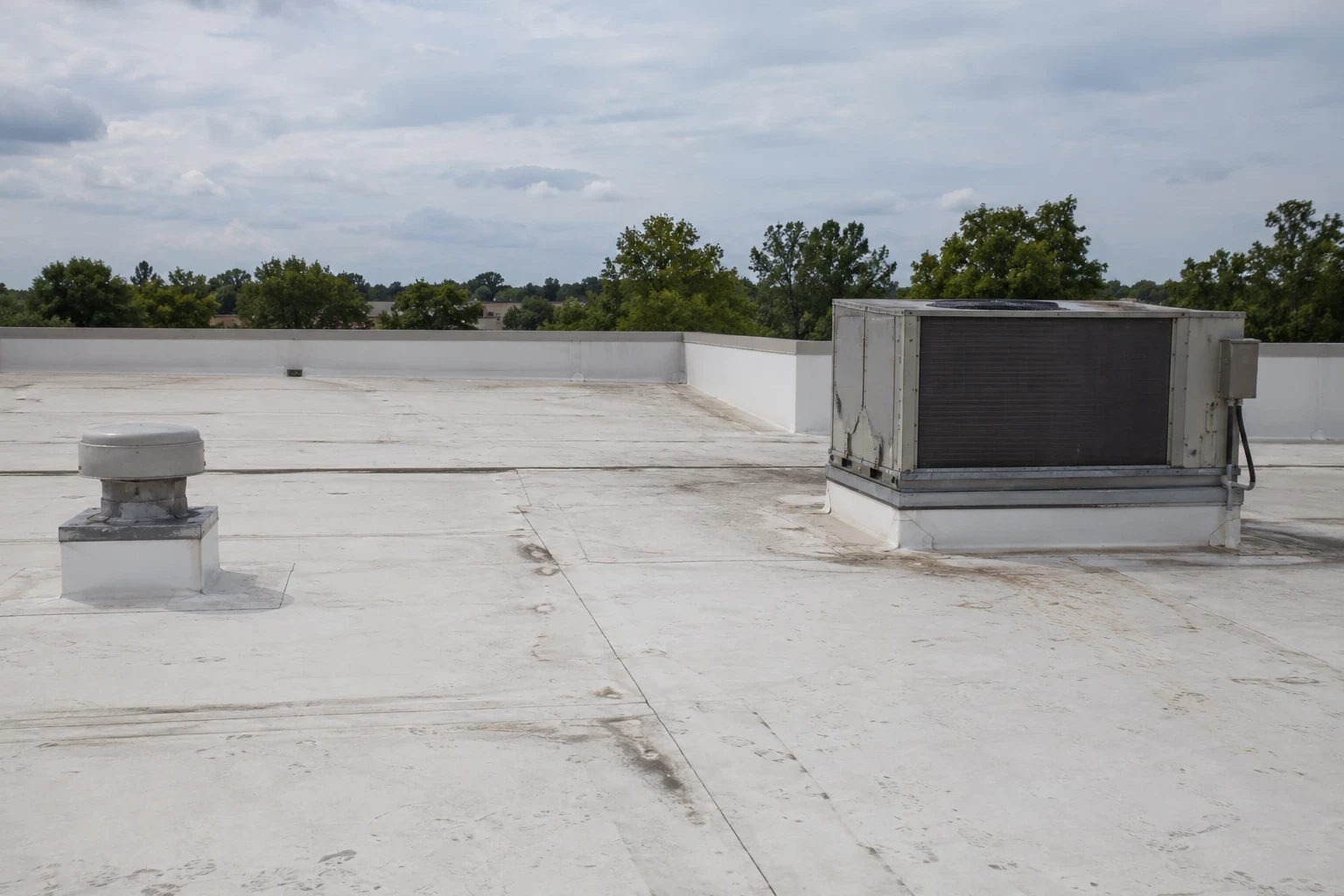
Modified bitumen is a reinforced asphaltic roof system, not a single uniform sheet. We note visible cap sheet, granule loss, blistering, exposed reinforcement, open laps, and transitions to base flashing. Where the roof record names SBS or APP, we verify the material before recommending heat, adhesive, or cold-applied repair methods. If the roof has overlays or patches, the scope shows how those layers meet rather than assuming the same assembly continues across the whole building.
South Park is mapped as a district-scale employment area within the I-24, road, and rail context in the local industrial geography. That context does not identify a roof's surfacing or loading, so we trace the building access route and inspect the roof itself. A built-up roofing comparison can help an owner distinguish a multi-ply assembly from a modified-bitumen system, while an EPDM review frames a different membrane family when renewal options are being compared.
Lap edges and base flashing need close review after heat, rainfall, maintenance traffic, or prior repair. We check whether a lap is open, fishmouthed, contaminated, or covered by a patch that no longer bonds. At a wall or curb, we follow the membrane up to its termination and inspect the counterflashing, corners, and sealant line. Near a drain, we note the bowl, clamping components, and material transitions that can trap water at the assembly boundary.
Clarksville's July and August normals include warm mean temperatures and recurring rainfall. That pattern makes a loose edge, exposed reinforcement, or blocked outlet worth documenting before the next wet interval. We do not infer a leak from weather alone. A hands-on roof inspection can map visible conditions, and a drainage assessment can distinguish an outlet issue from a low point or membrane failure.
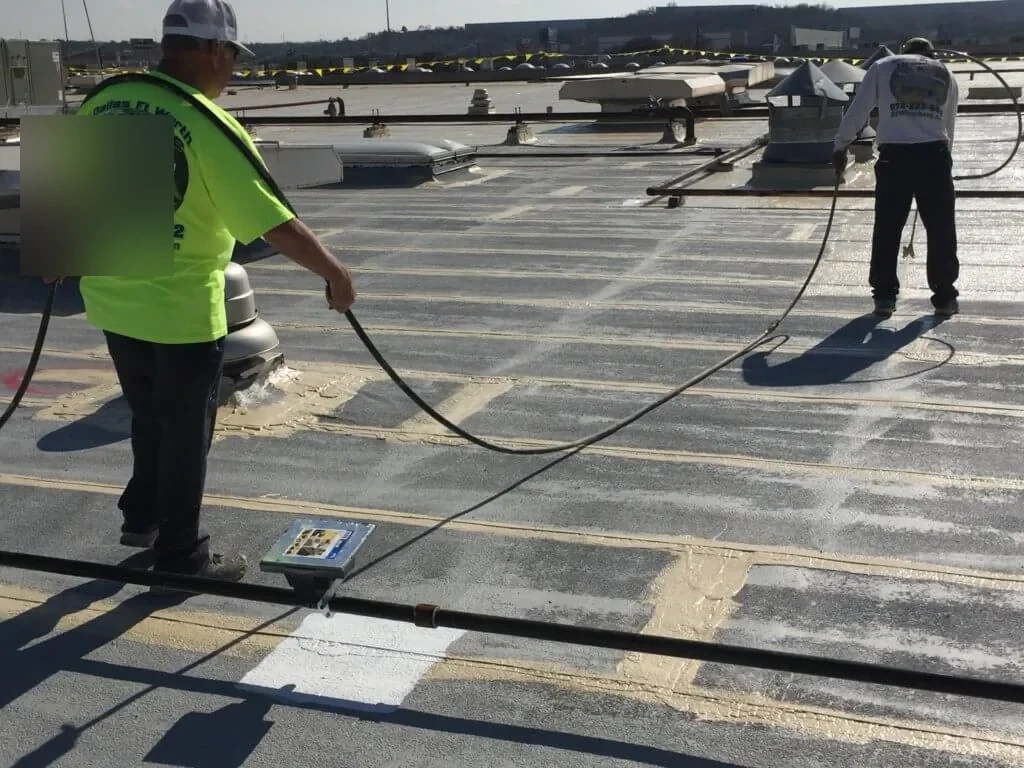
A repair on modified bitumen must match the existing system and roof conditions. We identify whether preparation requires cleaning, drying, removal of loose surfacing, or a test area before a patch is installed. The repair note states the layer that will be opened, the reinforcement or flashing detail involved, and how the patch ties into sound material. If a torch-applied method is not suitable for the location or building conditions, we consider another compatible detail and state the limitation.
Clarksville's adopted 2018 International Building Code and Existing Building Code are part of the project context when repairs change the assembly or proceed through permit review. The responsible design professional and jurisdiction confirm which requirements apply. For damage near an edge or a localized impact area, a heat and surface review or a hail-related inspection can separate visible wear from a verified opening without extending the claim beyond the field evidence.
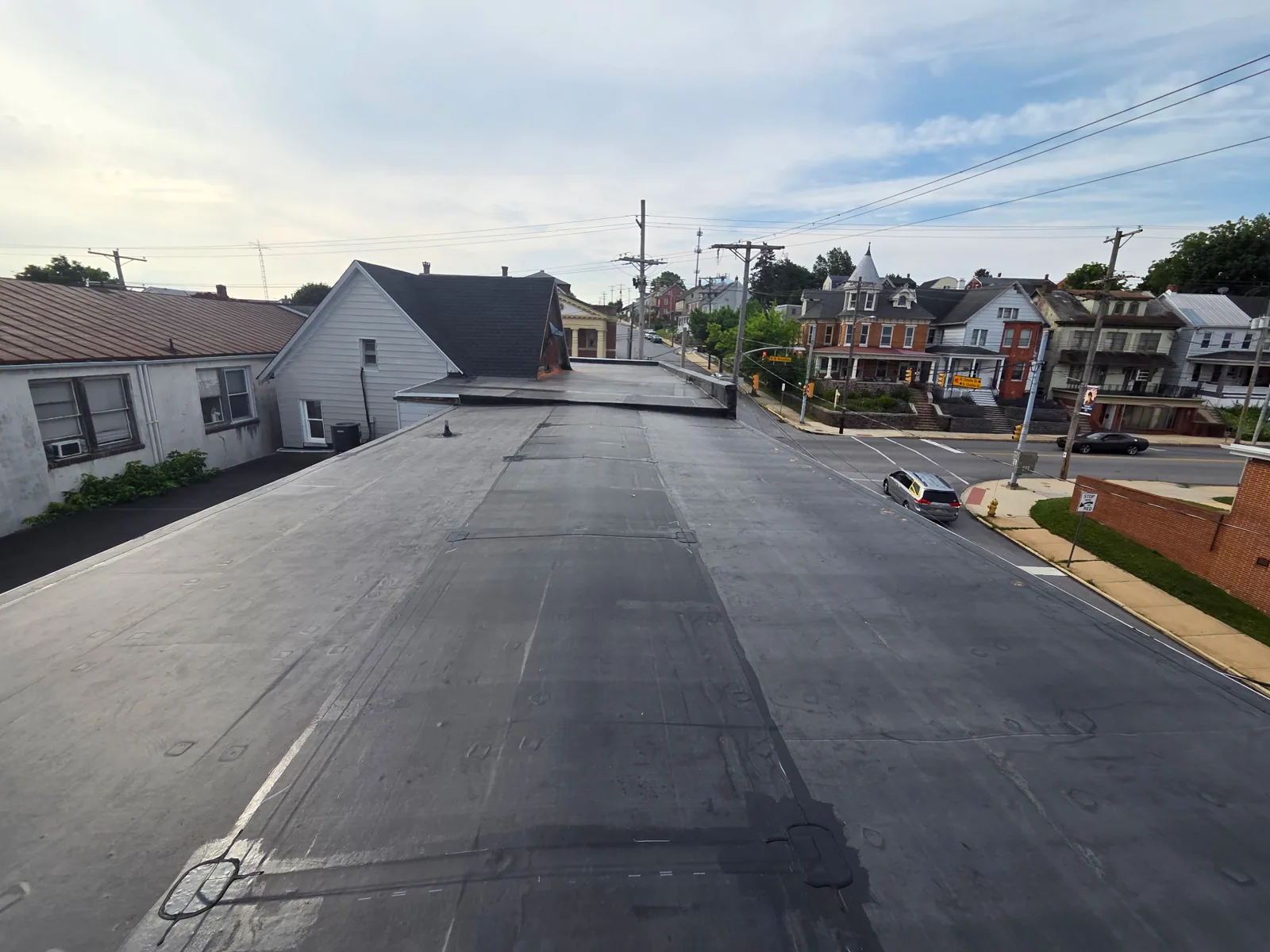
Modified-bitumen work needs a realistic daily close-in limit. We schedule surface preparation, material placement, flashing, and protection around current weather and the system's installation requirements. The facility contact confirms roof access, deliveries, work hours, and the rooms or inventory below the active zone. If a shift ends before a boundary can be completed, the dry-in plan identifies how the exposed edge will be secured and who accepts the area.
Warfield Boulevard is a public arterial in Clarksville, and the roadway classification connects it with Wilma Rudolph Boulevard and Madison Street. That road context can inform travel planning, but it does not grant staging or curb access at a property. We verify the receiving area, equipment route, and approved roof entry with the site contact. A commercial roof near Warfield Boulevard still gets a site-specific access note and an occupied schedule tied to actual operations.
We compare project records with the visible material, reinforcement, surfacing, and installation details. If the label is missing or an overlay obscures the assembly, we mark the uncertainty and identify what sample, opening, or record would confirm it before a repair method is specified.
The location and extent matter. We check exposed reinforcement, lap condition, drainage, and whether the surface loss aligns with a reported leak. The roof map shows confirmed deterioration separately from a maintenance observation and identifies whether a test area would change the recommendation.
We coordinate hot-work restrictions, noise, odor, access, protection below, and material movement with the facility contact. The approved work zone remains small enough to secure before the shift ends. If the chosen method conflicts with operations or weather, we adjust the sequence rather than leaving an open boundary.
Wet insulation, unstable plies, blocked drain details, added height at edges, or uncertain attachment can change the recover decision. We document those conditions and any test opening before describing the viable option. The owner receives the limits and the added work that could follow concealed damage.
Keep dated photographs, material and repair method, opened roof zone, lap or flashing location, and any area deferred. The handback should record weather protection and the next inspection point. Future staff can then compare the same detail with the current record.
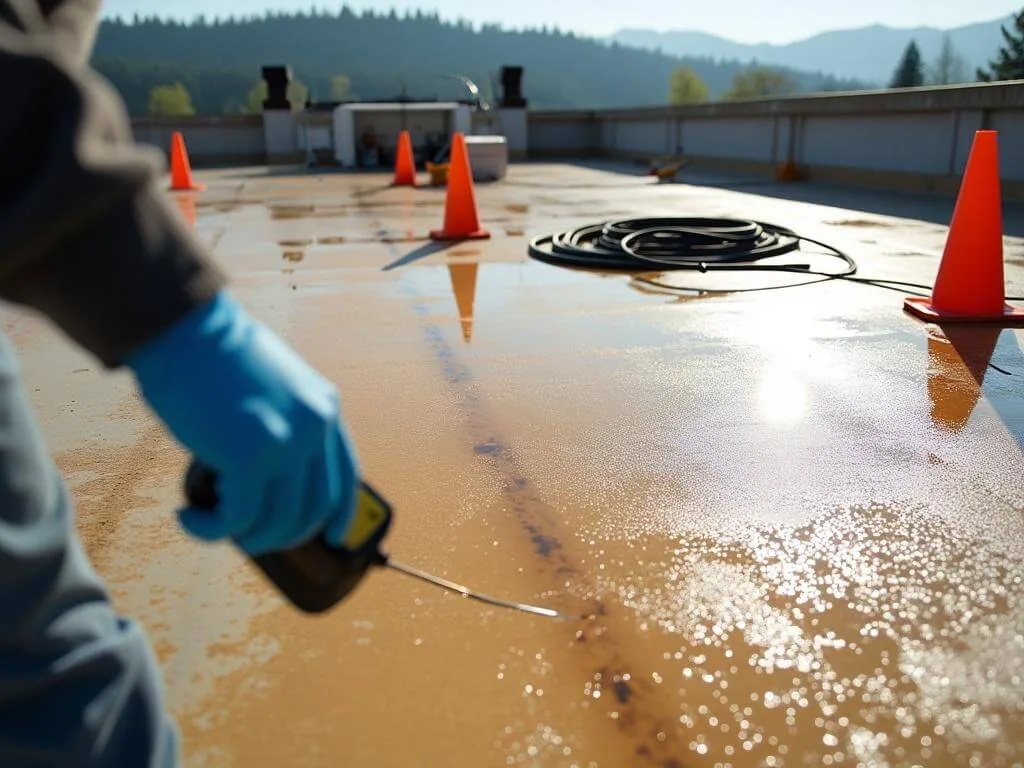
Repeated lap openings, widespread loss of surfacing, wet insulation, or layers that obscure drainage details can shift the decision from another patch to broader renewal. We map each finding, record what a test cut confirms, and list any area that remains inaccessible. A recover review can compare added material with existing edge height, drain depth, and attachment. If removal is more appropriate, the replacement scope shows the tear-off, deck review, new insulation, and flashing details that still need owner approval.
The final file should include the assembly description, roof-zone photographs, completed repair limits, weather hold points, and the next inspection action. That record keeps a later budget review from treating separate repairs as one general condition. If water is entering during a storm, our emergency roof response is available at any hour, including weekends and holidays; we secure the active opening and coordinate the permanent work when the roof can be prepared safely.
For a larger repair, we also check how edge metal, drains, and parapet flashing meet the modified-bitumen layers. A cap sheet can look intact while a corner or drain transition is open, so the scope identifies each boundary rather than listing one roof-wide quantity. If the deck or insulation is exposed, we photograph and record the condition before another layer covers it. The owner decides whether added work proceeds at that approval point.
Timing also reflects roof access, hot-work restrictions, material staging, preparation, and the time needed to protect a completed lap. We separate those items from any allowance for concealed conditions. That gives the facility a way to compare options without treating a test opening as approved removal across the full section.
Share the roof file, leak history, access conditions, and operating hours. We will identify the system, inspect laps and drainage, and return a written repair or renewal sequence.