
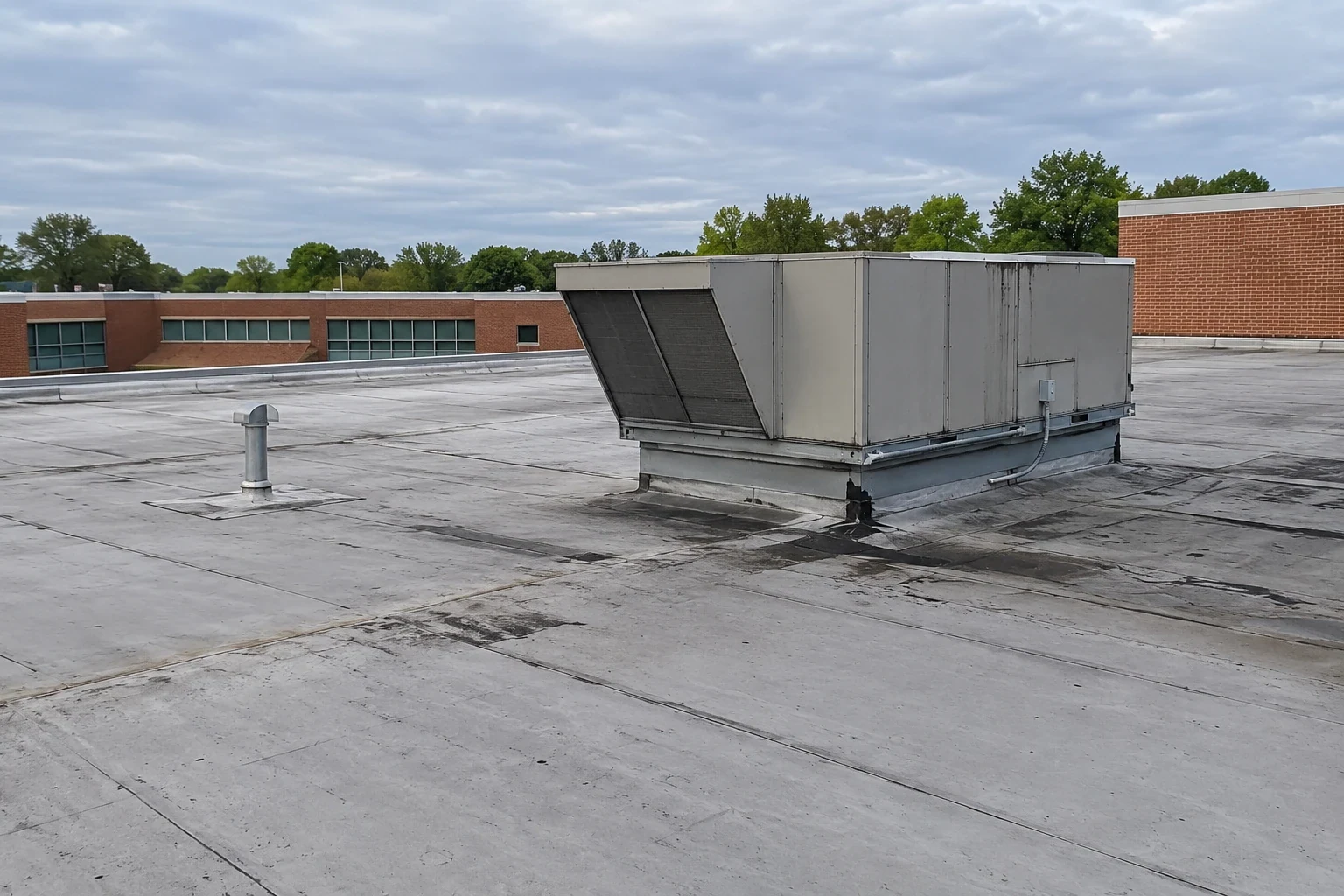
A roof decision in a real estate portfolio needs evidence an asset manager can carry from the site walk to the capital review. In Clarksville, May is the wettest month in the cited climate normals, while summer brings high mean temperatures and repeat rain. We connect those conditions to what is actually visible on the building: open seams, wet insulation, edge movement, drainage restrictions, or a repair that needs another inspection. North Park, East Park, and South Park are broad employment districts on the local industrial map, but no district label can substitute for a roof-level record. We document the property, its operating limits, and the next decision as separate items.
Before an acquisition, refinance, or annual budget review, the useful question is not whether a roof looks old from the parking lot. We record the assembly where it can be confirmed, inspect seams and penetrations, follow runoff to drains, and compare interior reports with the roof above. Photographs identify each roof zone and distinguish visible defects from areas that need a test opening. If access is limited or a system is concealed, the report says so and identifies what additional review would resolve it.
Clarksville's IDB map places manufacturing and logistics users in a wider road and rail context. That points to varied commercial building use, not a standard roof type or value. A roof due-diligence survey can give the investment file a consistent baseline. For a property team managing several sites, the building-level maintenance record should stay separate from portfolio comparisons so an issue at one address does not become an unsupported assumption about another.
Clarksville's documented severe-weather history belongs in the portfolio's risk context, but each property's roof survey must establish its own edge, penetration, and impact conditions. Those events make edge securement, metal details, penetrations, and impact observations relevant inspection items. They do not establish that a particular asset was affected. We photograph the condition at each building, note where water or displacement is visible, and distinguish storm-related evidence from age, prior repairs, or maintenance needs that cannot be dated from a surface walk.
For underwriting, the difference matters. An observed opening may support a defined repair; broad wet insulation or repeated failure can change the capital scope. We map the finding, state the repair limit, and note whether a moisture survey or selective opening is needed. If the asset is near North Park or the I-24 employment area, those place references help orient the file, while inspection findings remain tied to the actual roof. The storm review organizes observations without promising insurance coverage or a specific outcome.
A repair is appropriate to evaluate when the defect is localized and surrounding materials remain serviceable. A recover requires a review of existing layers, attachment, moisture, drainage, and code constraints. Replacement becomes a stronger candidate when failures recur across zones, insulation is broadly wet, or the assembly cannot provide a dependable tie-in. We keep these paths distinct and show the conditions supporting each one rather than presenting a roof-wide conclusion based on a single leak report.
Capital timing also depends on deck condition, edge metal, equipment resets, disposal, tenant access, and the weather window available for each phase. The scope identifies included work and the conditions that may require owner approval after removal. An replacement assessment can be compared with a bounded repair scope using the same roof zones and documented assumptions. For a manufacturer or system question, the roof assembly options should be considered against the existing deck and operating needs, not selected from a product name alone.
Tenant use, deliveries, equipment service, and occupied hours can change the order of work. We ask which entrances and loading routes must stay available, when noisy work is possible, and whether a room below the roof requires extra protection. The work zone is limited to the area that can be dried in and secured during the weather window. Each daily handback states what was completed, which space can return to normal use, and any restriction or follow-up that remains.
A building along Rossview Road may have a different access pattern from a warehouse in East Park, but the property manager confirms the actual route and tenant schedule. A phased reroofing plan can sequence sections when the assembly and forecast permit. We coordinate lift placement, roof access, material staging, and a contact for change decisions before the crew opens the system. For industrial assets, a manufacturing roof review can also account for production constraints. That gives the investment team a schedule grounded in the site's operating facts instead of a generic duration.
Ask for mapped roof zones, dated photographs, observed defects, access limitations, and any areas that need testing. We state which assembly details were confirmed and which remain uncertain. A short label such as good or poor does not show the work boundary or the assumptions behind a capital allowance.
No. The NWS record establishes a regional event, not the condition of a particular roof. We inspect the building for displaced metal, opened seams, punctures, water entry, and other visible changes, then connect findings to a repair scope. Any claim or concealed damage question needs its own evidence and review.
Compare the same roof areas, removal assumptions, insulation work, equipment resets, drainage, edge details, access, disposal, and weather protection. We identify exclusions and approval triggers so the owner can see why totals differ. If conditions are not yet known, the scope should state what verification happens before added work proceeds.
It can. Tenant entrances, loading, business hours, equipment service, and protection below may divide a project into phases. We mark the work zone, define a dry-in point, and give the property contact a daily handback. The plan names restrictions and reopening steps rather than assuming the building can absorb any schedule.
Keep the inspection record, zone map, photographs, scope, material and tie-in notes, daily handbacks, and any follow-up item together. The next inspector can compare the same detail and tell a new condition from a recurring one. We can prepare a closeout record with the owner contact and building manager.
The closeout should include the roof plan or zone labels, photographs, work limits, materials used, tie-in locations, and unresolved observations. If temporary protection remains, the record names the next check and who owns it. That creates a usable comparison point for a later inspection or sale file. We can prepare a photographic roof condition report that separates current findings from recommendations and possible concealed conditions.
Investment teams can preserve a common reporting format while retaining building-specific history. One property may need an immediate seam repair, another a drainage correction, and a third a capital review after additional testing. Our written scope identifies the work area, access plan, weather window, and approval point if removal exposes a different condition. A roof walk with the asset manager or building contact can establish the next decision and leave the records clear enough for the next operating or ownership handoff.
Schedule a Clarksville roof walk with the asset manager or building contact. We will document the observed condition, compare practical scope options, and prepare a record that can move with the property file.