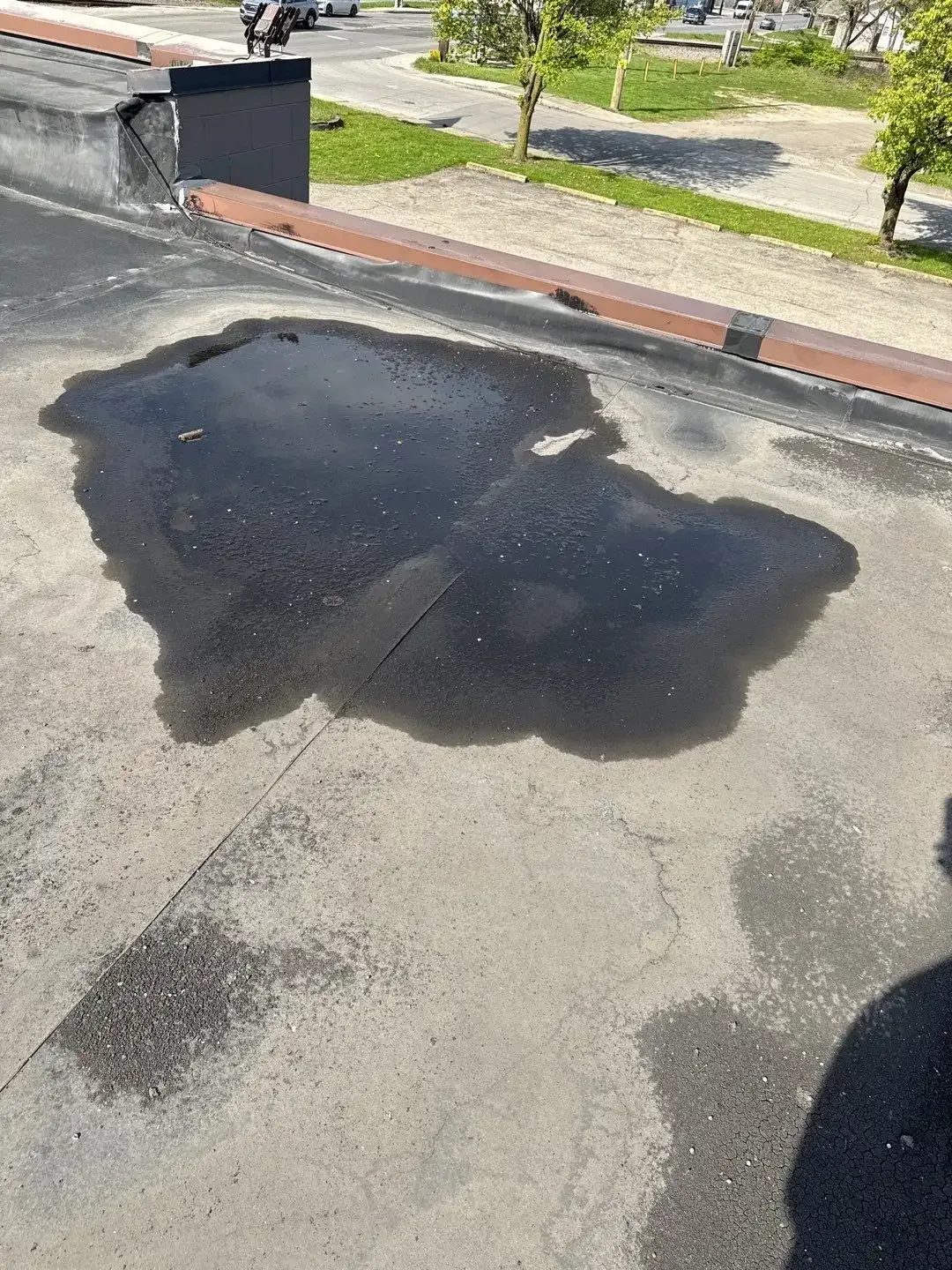
After hail, a roof can look intact from the parking area while impact marks remain concentrated at drains, edges, curbs, or equipment. We inspect by system, map observed marks, and separate hail evidence from aging, foot traffic, and earlier repairs. Clarksville's National Weather Service event page for May 8, 2024 includes local hail reports up to an estimated three inches, with the survey information identified as preliminary. That event is useful context for inspection planning, not proof that a particular roof was struck. Each building gets its own photo record and repair boundary.
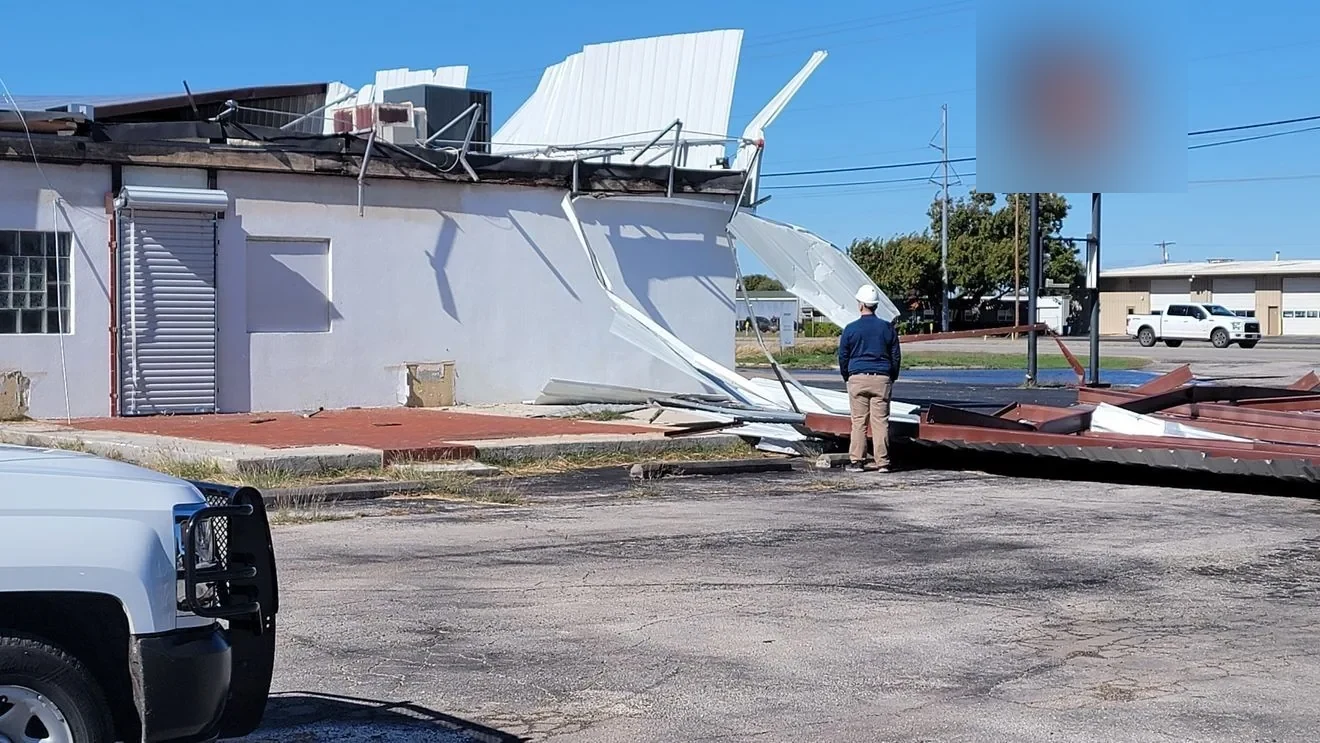
Begin with safe access and a roof plan. Photograph representative locations, including open field, perimeter, flashings, penetrations, drains, rooftop equipment, and any surface already worn or patched. On membrane systems, look for cuts, punctures, displaced surfacing, split seams, or a bruise that may have affected layers below. On metal, record dents, damaged coatings, open closures, loose fasteners, and changes at panel joints. A dent alone does not establish a leak or loss of service life; the report should describe what the mark means for that material.
Interior reports can help prioritize locations, but hail impacts and water entry are not always directly aligned. We compare stained areas with the roof above and with likely paths through seams, curbs, and deck joints. A commercial roof inspection can extend the sample across several roof sections and preserve the distinction between impact evidence and confirmed openings.
Weather reports help set the date and general area for a review, but they do not replace field inspection. The National Weather Service's May 8, 2024 Clarksville-area event page includes hail reports estimated as large as three inches and labels survey information preliminary. We use that as a reason to check exposed surfaces and vulnerable details, not as a measurement of hail at any one address. When an owner has a claim, keep the storm date, roof map, photos, prior condition records, and repair invoices together.
Clarksville's official FAQ identifies Wilma Rudolph Boulevard/US 79, Rossview Road/SR 237, and Tiny Town Road/SR 236 among major thoroughfares. They provide broad local orientation, not a hail track or property damage map. If the building is near Rossview Road, the actual address and gate still need confirmation before inspection. A claim documentation review can organize observations without deciding coverage or promising an insurer's outcome.
If impact has punctured a membrane, broken a skylight, or opened a flashing detail, protect the interior and mark the temporary repair. The crew should record what material was displaced, what was covered, and when the protection needs another check. Temporary dry-in keeps water from entering while the permanent scope is developed, but it should not hide neighboring impacts or block a drain. If safe access is limited, note which roof zones were not inspected and plan a return.
For an active leak or exposed opening, emergency roof repair can address immediate protection. A membrane puncture review checks cuts or penetrations. Keeping these findings separate helps the owner understand whether one repair resolves the leak or whether other impact-related work remains.
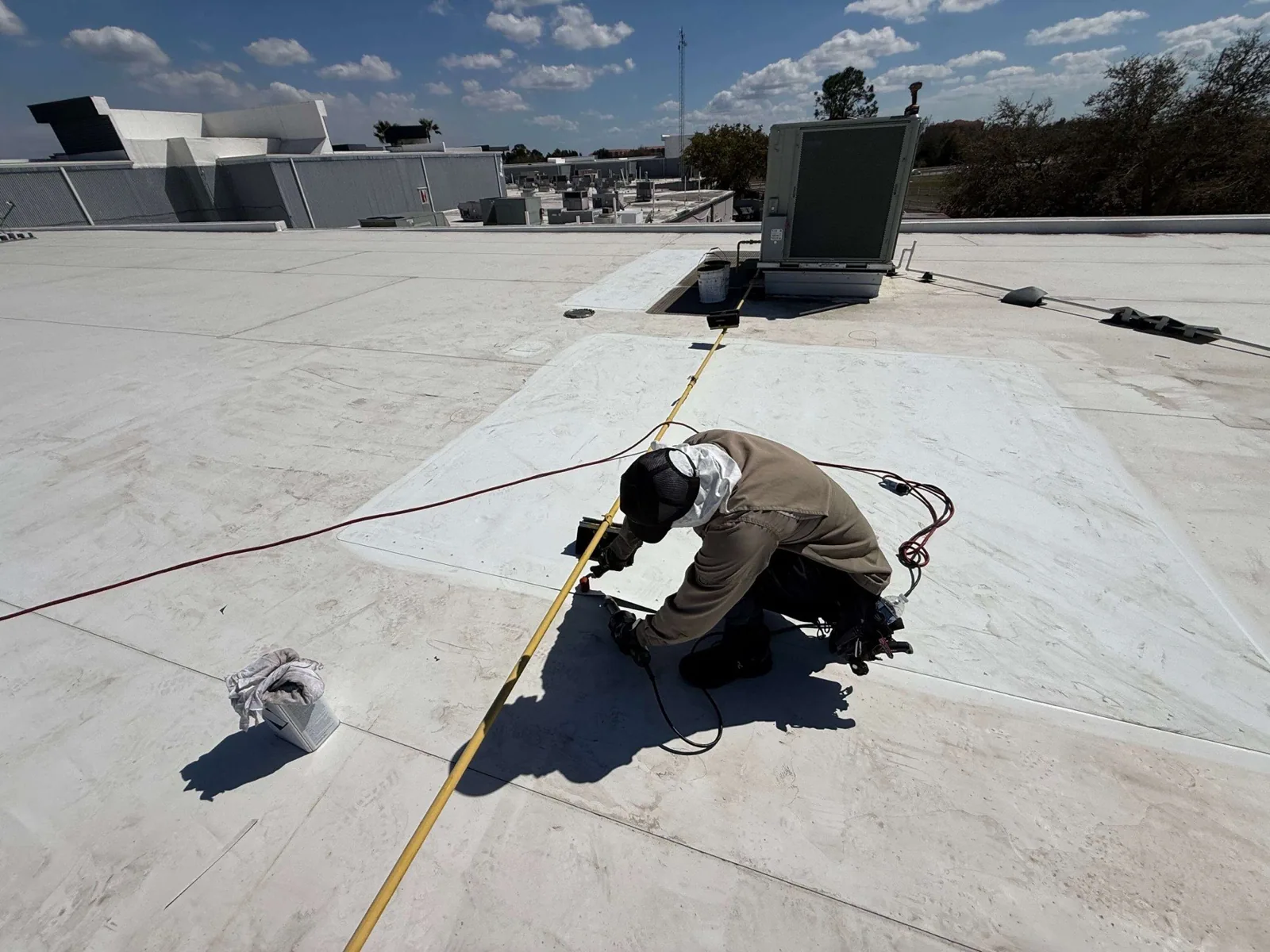
For a membrane, a repair must bond or weld to prepared material and extend beyond the affected area. A surface mark may need no repair, while a cut, split seam, or crushed layer may need removal and replacement. For metal, check the coating, panel joint, fastener, and supporting attachment before filling or covering a dent. A repair that locks a moving panel or seals over a loose closure can create another failure point. We identify the existing system, compatible product, preparation, and tie-in limits in the written scope.
Clarksville's long-term normals include July average temperature of 79.4°F and 3.64 inches of precipitation. Those readings describe climate rather than the roof's conditions during repair. We check actual moisture, surface temperature, and weather window before applying materials. If the event also caused an open seam, the seam repair review can define the lap separately. The scope lists which impact marks are repaired, which are monitored, and what would justify a test opening.
Not by itself. Inspection should check the coating, seams, fasteners, closures, and attachment. The report can document cosmetic marks separately from damage that affects water shedding or the roof assembly.
A ground view may reveal impact to equipment or skylights, but it cannot show all membrane, flashing, or seam conditions. Roof access should be performed only by qualified personnel using the facility's safety requirements.
Address active leaks or openings promptly. For a stable roof, a timely survey helps preserve the condition record and identify repairs before the next weather event changes the evidence.
No. We can document observed roof conditions, photographs, repair scope, and dates. Coverage decisions belong to the policy and insurer; we do not promise a claim result.
The report should show which zones were reviewed and which were not. We can prioritize accessible or reported areas, then schedule a safe return for deferred sections.
Hail surveys can cover large roof areas and may involve several buildings. Before work, confirm roof access, fall protection, staging, escort requirements, equipment hazards, loading periods, and interior spaces needing protection. Divide the roof into named zones so photographs and findings can be checked against the same plan. The facility contact should know which areas were inspected, which were unsafe or inaccessible, and when temporary covers will be revisited.
Agree on how the crew will label photo files and mark each zone before inspection starts. That prevents one building's impact photos from being filed against another roof and helps the owner compare future observations. If a tenant is operating below, identify sensitive equipment and set a daily handback before roof work begins.
The Clarksville-Montgomery County IDB map distinguishes North Park, East Park, and South Park as multi-property industrial areas with road and rail context. This does not identify any one building's condition; it emphasizes why each structure needs its own survey record. For a portfolio near South Park, a work plan for occupied facilities can coordinate zones and daily handback while operations continue.
Closeout organizes the roof map, representative impact photographs, repair limits, materials installed, and unresolved observations. The record should distinguish direct impact from pre-existing wear and state whether each zone was inspected or deferred. If no leak was found, say that; do not describe a mark as proof of hidden damage. If water entry continues, compare the leak location with the original map and inspect likely pathways before extending the work.
For an owner or insurer review, keep photographs, date, roof-zone reference, and repair invoice together. A before-and-after sequence can show what changed without overstating what the inspection proved. Note inaccessible areas and what should trigger a return visit, such as a new leak or loose edge detail. A later maintenance visit can revisit repaired and monitored areas, check nearby seams and drains, and update the condition baseline. For roof sections that need broader renewal, replacement planning can compare the documented repair extent with the remaining system condition. The owner receives a practical next step rather than a blanket conclusion based only on a storm report.
Share the roof plan, storm date, interior reports, and any prior condition records. We will map observed conditions, secure active openings, and separate repair needs from items that should be monitored.