
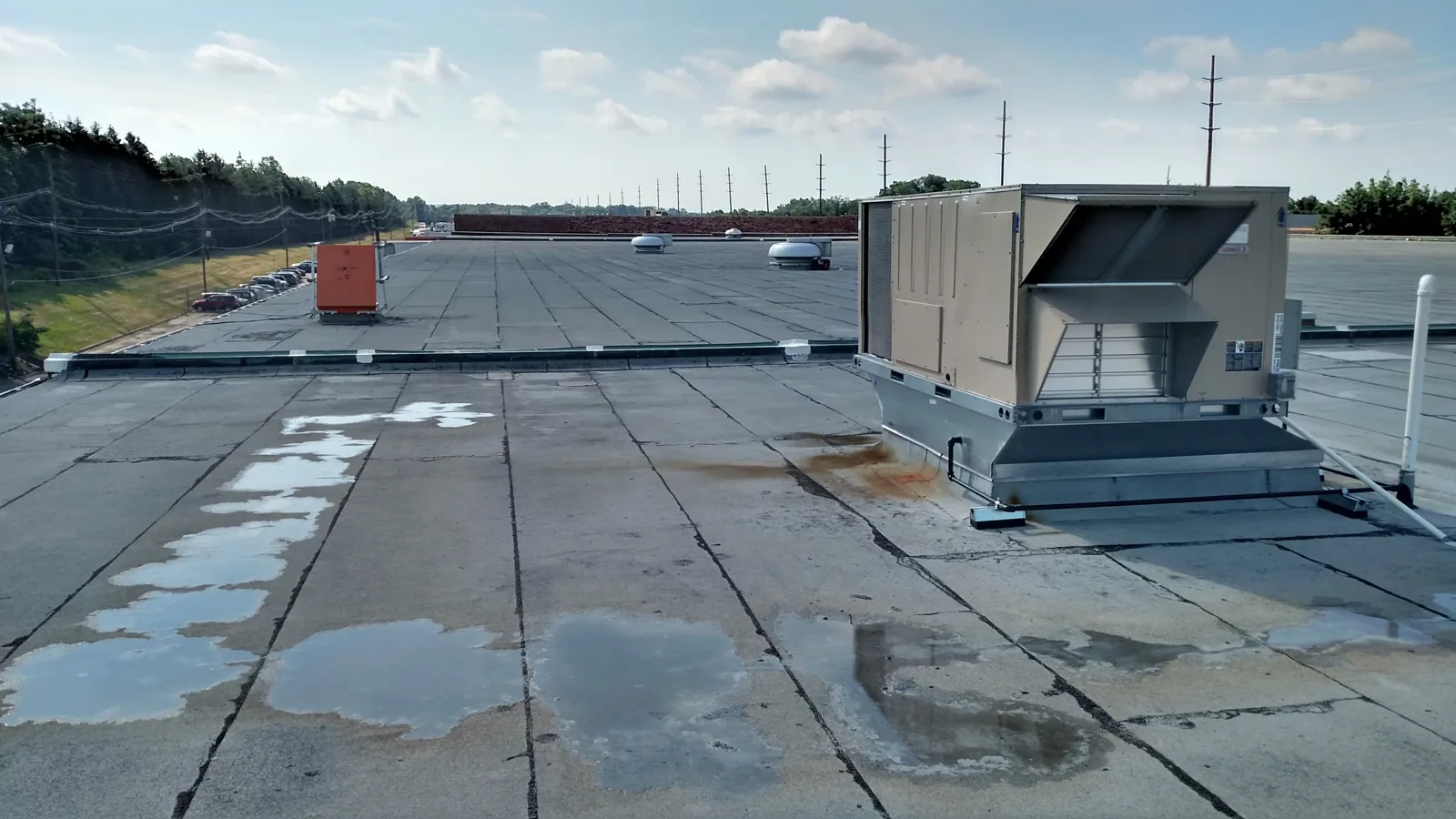
A shallow pool after rain is a clue, not a diagnosis. The useful question is whether water is draining as intended, or whether a blocked outlet, settled insulation, a deflected deck, or a damaged membrane is holding it in place. We map the waterline, record its depth and footprint, and compare the observation with drains, seams, curbs, and interior reports. That gives a facility team a repair boundary it can revisit after the next weather window. Across Clarksville, roofs serving North Park, East Park, and the South Park employment areas still need building-specific drainage plans; a district name does not explain the slope or outlet arrangement on an individual roof.
Start with the perimeter of the pond, not the center. A ring of sediment, algae, or displaced granules can show where water repeatedly stops, while a clean channel toward a drain may reveal that the outlet works but the approach is restricted. We photograph the area from a stable access point, mark the pond on a roof plan, and note rainfall, drain condition, and visible surface changes. A single visit cannot tell us how long the water has been standing, so the report separates what we saw from what needs follow-up.
Next, inspect the nearby assembly. A depressed membrane may follow a soft layer below; a sharp crease can indicate movement; a seam crossing the pool can admit water. We check the drain bowl, strainer, clamping ring, flashing, and route to the opening. A broader commercial roof inspection can add adjacent sections to the map. A condition report with marked findings ties the observation to photos, interior locations, and a next inspection point.
Debris is only one possible cause. A blocked strainer can slow an otherwise sound drain, but the route may also be interrupted by a raised curb, a patch, displaced ballast, or a change in roof elevation. We check whether water has a continuous route from the pond edge to the drain and whether the outlet itself is open. If the drain is clear, we look for reverse slope, a low point beyond the bowl, or a roof area that collects runoff from a larger upstream surface.
Clarksville's long-term climate record includes precipitation in multiple seasons. For a ponding investigation, that background is a reminder to preserve the observed waterline and outlet condition so they can be compared after another suitable weather window; it is not a measurement of how long this roof holds water. We can schedule a roof-drain and scupper review when outlets, overflow provisions, and discharge paths need a closer look. If a drain component is damaged, we identify the connection and surrounding membrane before recommending replacement.
A roof can retain water because the surface follows a low spot below it. We look for soft areas, broad depressions, fastener patterns, and changes at adjoining sections. Where the evidence supports further investigation, a controlled test opening can confirm whether insulation is wet, compressed, or separated. The written scope states the location and size of any opening, how it will be protected, and what decision depends on the result. We do not infer hidden damage from a photograph alone.
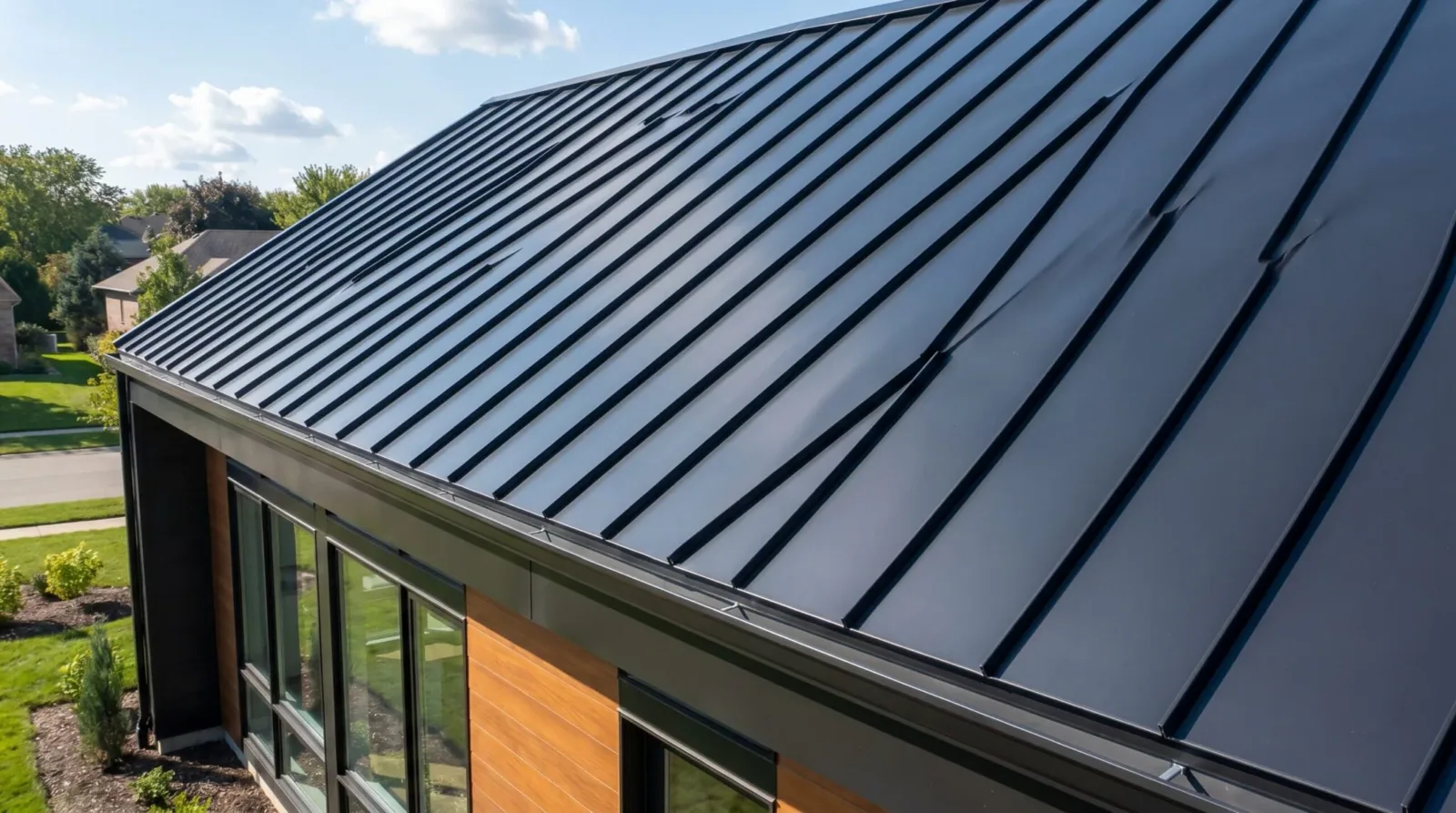
On a membrane roof, the repair may need to correct a seam, patch, or flashing detail before slope work can help. On a metal roof, the geometry and panel drainage path are different, so a surface pool may point toward a localized obstruction or transition rather than a membrane depression. We document the system, avoid mixing incompatible repair materials, and connect new work to sound, prepared surfaces. If water has entered at a lap, the open-seam repair assessment can isolate that issue. If a wall, curb, or penetration is involved, a flashing repair review follows the transition instead of treating the pond as the only defect.
We first remove loose debris from the documented route and confirm that the drain or scupper is open. That does not resolve a low slope or compressed insulation, so we record it separately from permanent work. If membrane material is opened, the scope identifies the cut line, substrate check, replacement material, seam treatment, and water-control plan. A re-slope or tapered-insulation design must account for roof elevations, overflow, and tie-ins; sealant cannot create a drainage plane.
A drainage correction that changes roof elevations, overflow, or assembly details may need design review. We map the existing water path and leave the applicable project requirements to the owner and design professional. We describe observed conditions without making a code determination. For a larger correction, commercial roof replacement planning can organize phases and close-in points. The proposal states included repairs, scope-changing conditions, and verification steps.
No. A roof professional should measure the area, check how it drains, and inspect the surrounding assembly before recommending replacement. A blocked drain or localized defect may call for a smaller repair; widespread deflection or failed materials may need a broader scope.
It can restore flow when debris or a blocked strainer is the cause. If the outlet is open and water still remains, the roof may have a low point, reverse slope, or compressed layer that needs separate investigation.
We review visible signs first, then recommend a controlled test opening only when evidence supports it. The location, size, temporary protection, and decision tied to the opening should be agreed before the roof is cut.
An active leak, overflow, or unsafe condition should be addressed promptly. For a stable pond, photos and a roof plan are useful starting points; a follow-up after suitable weather can then compare the same locations with the baseline.
Look for the diagnosed cause, marked repair boundary, materials and tie-ins, access and dry-in plan, exclusions, and a clear verification step. If a test opening or drainage redesign may change the work, the proposal should explain that decision point.
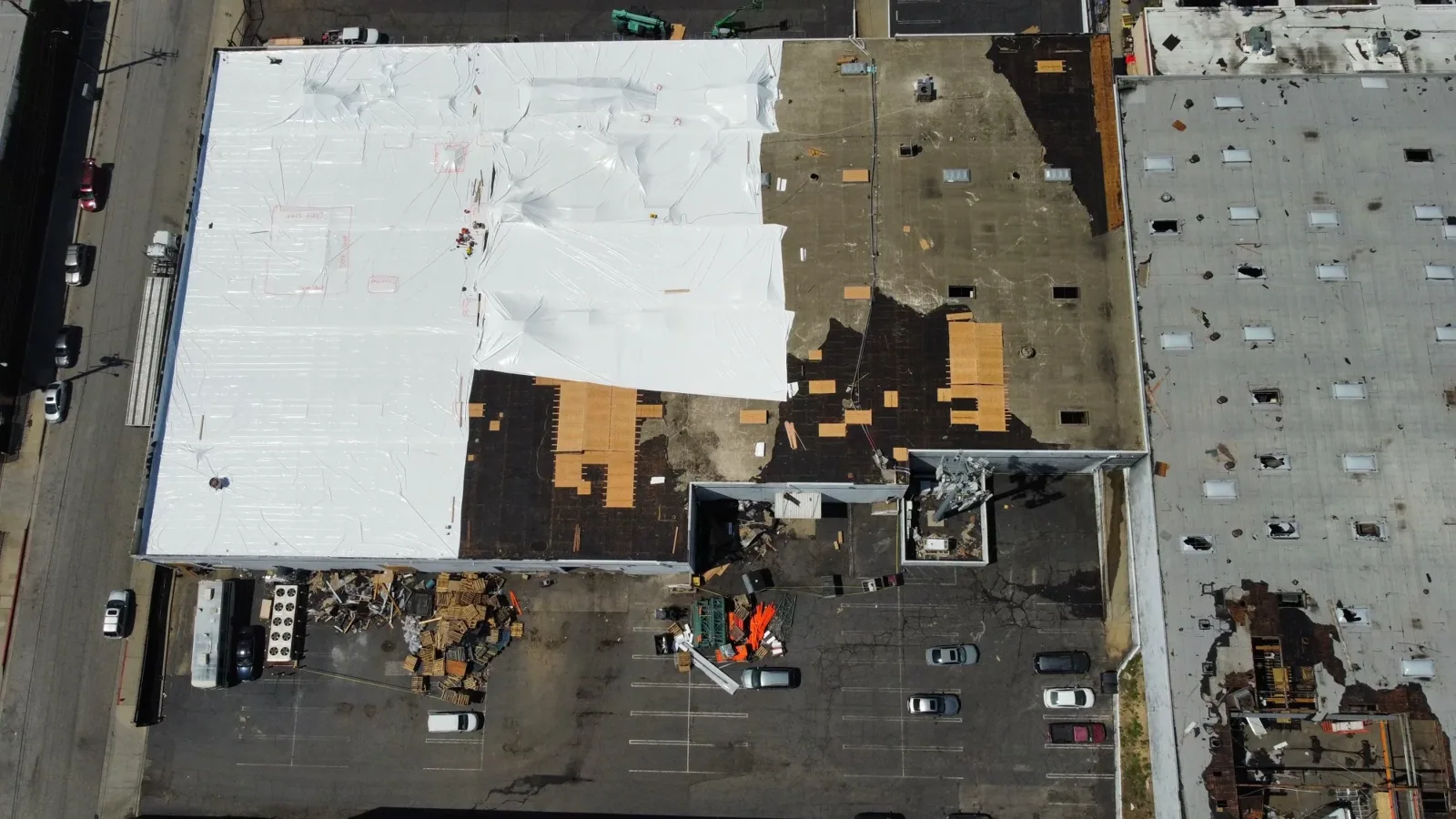
Drainage work can interrupt loading, production, tenant access, or rooftop equipment service if the zone is not planned. Before mobilization, we confirm roof access, staging, overhead hazards, circulation, and work hours. We divide a large roof into marked zones and set a daily dry-in point to protect unfinished areas if weather changes. The facility contact knows which drains are being cleared, where materials are staged, and which route remains open.
Clarksville's roadway FAQ names Wilma Rudolph Boulevard/US 79 and Trenton Road/SR 48 among its main thoroughfares. Those corridors orient service but do not establish a property's entrance, truck route, or roof access. We verify the gate with the site contact. Near North Park or the Trenton Road corridor, the crew confirms site conditions before scheduling. A roof access plan sets the next inspection point and daily handback.
Closeout should answer more than whether fresh material was installed. We photograph the repaired area, drain, and tie-in, record the weather and surface condition during installation, and identify any limits on the observation. A controlled water test is useful only when the roof design and conditions make it appropriate; it should not add water to a section that cannot drain safely. Otherwise, the next practical check may be a documented visit after a suitable rain, with the same pond boundary and outlet locations compared to the baseline.
That comparison helps distinguish a repaired defect from a broader drainage issue. If the original pond shrinks but a separate low area remains, the report should say so. If the drain is clear but water still collects, a further slope or substrate assessment may be needed. We return the roof plan, photographs, repair limits, and follow-up timing to the facility contact. For an urgent leak during diagnosis, emergency roof repair support can focus first on protecting the interior and securing the opening, while the permanent drainage scope remains specific to the verified cause.
Share the roof plan, pond location, drain photos, and any interior reports. We will map the drainage path, identify what remains unverified, and return a repair scope with access, protection, and follow-up steps.