An open seam is a visible break in a roof's water-shedding line, but the split may be only the point where a larger movement or adhesion problem became obvious. We mark the opening, check how far separation continues, and inspect the adjoining material before choosing a repair width. The goal is a tie-in to sound roof, not a narrow bead that hides an unstable edge. Commercial properties across Clarksville vary in assembly, access and operating schedule, so we inspect the failed seam at the specific roof rather than infer a repair from its district or building use.
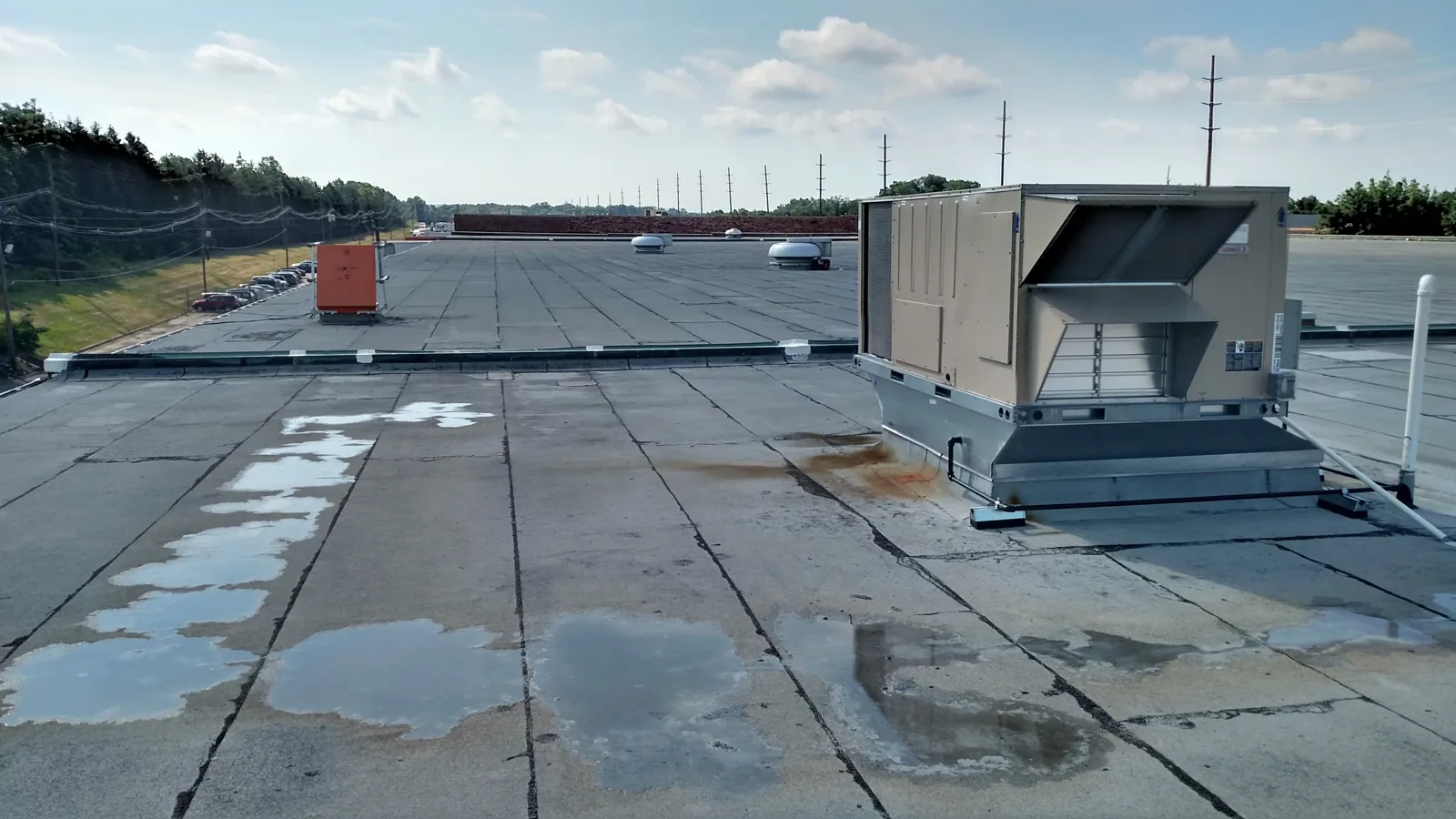
Start with a safe close inspection of the seam and a roof-plan mark. Record the opening's length, direction, surface condition, nearby fasteners, ponding, and any patch or prior repair. Check whether the opposite lap edge remains attached and whether the membrane or metal has pulled, wrinkled, or shifted. A split that continues under a cover strip may need a longer boundary than the exposed section suggests. We photograph the beginning and end of the defect, then follow it to a point where both sides are secure.
Interior reports help locate where water may have traveled, but a stain does not necessarily sit directly below the seam. We compare the roof position with drains, curbs, penetrations, and deck joints. A broader commercial roof inspection can identify related defects across adjacent sections. For an ongoing leak, an emergency repair visit can secure the opening while the permanent repair is scoped. The record distinguishes a confirmed separation from a suspected path or inaccessible area.
Seams can open because of poor preparation, insufficient weld or adhesive, contamination, movement, incompatible repair material, or age-related loss of bond. On metal panels, a seam or closure may move with the system and needs a different repair detail than a membrane lap. We identify the roof type and attachment method, then check whether the failure is isolated or repeats at the same detail across the field. A roof that is wet beneath the lap or has compressed insulation may require a controlled test opening before the repair is finalized.
Clarksville receives precipitation in multiple seasons, so a seam repair needs a documented preparation and close-in sequence. The daily forecast and actual surface condition govern that sequence, not the long-term climate record. They make the condition of tie-ins and close-in points worth documenting through varied weather windows. If water also remains at a low point, a ponding-water repair assessment can track drainage separately from seam adhesion. When the split meets a wall or curb, a flashing-failure review checks the change in plane and its termination.
For membrane systems, surface preparation is as important as the patch. We remove contamination and loose material within the agreed boundary, confirm the surface is ready, and use compatible sheet, cover strip, primer, or adhesive as specified for that assembly. The repair must extend beyond the failed area onto material able to bond. At intersections, corners, or prior patches, the detail may require a wider replacement to avoid placing a new termination on a weak edge.
Metal roofing needs a check of panel movement, clips, fasteners, closures, and sealant compatibility before a seam is closed. Over-fastening or locking a moving panel can create a new stress point. The scope states what is being replaced and what remains in place. Our standing-seam system review can map panel direction and attachments before a metal repair. If the roof has widespread deterioration, replacement planning may compare localized repair with broader work without assuming one option before conditions are documented.
Seam work depends on clean, prepared surfaces and a suitable installation window. We coordinate access, work zone, material staging, and rooftop equipment clearances with the facility contact. If the building remains occupied, identify loading periods, tenant circulation, and any sensitive activity beneath the roof. The crew marks the repair area, sets a daily dry-in point, and leaves a clear handback record if work pauses. Temporary cover should not conceal the seam's limits or obstruct drainage.
Clarksville's official FAQ lists Wilma Rudolph Boulevard/US 79, Warfield Boulevard/101st Parkway/SR 374, and Tiny Town Road/SR 236 among its main thoroughfares. These routes orient service planning but do not confirm gate access or truck clearance at any property. We verify the actual approach, escort rules, and roof route before mobilizing. For multi-building work near East Park or Tiny Town Road, separate roof maps and repair notes keep each facility's findings distinct.
When the seam crosses a roof section that cannot be isolated, the facility contact should know how drainage, equipment, and interior protection will be managed during the repair. We identify which units must remain operating, whether roof access needs an escort, and what items are sensitive to dust, heat, or vibration. A daily handback lists the repaired length, any exposed work left under protection, and the next crew access time. If conditions change, the work pauses at a secure dry-in point rather than leaving an open lap at shift end. That sequence gives operations staff a clear record of what was completed and what still needs attention.
Often, if the separation is limited and the adjacent roof material is sound. The inspection should check the full lap, substrate, and previous repairs before defining a patch or replacement boundary.
The earlier work may have stopped at the visible split, used an incompatible product, or left movement or wet material unresolved. Comparing the old repair boundary with current conditions helps identify whether the cause is still present.
No. Metal panel movement, clips, closures, and fasteners require a different review from membrane preparation and welding or adhesive. The roof system determines the repair method.
Access and safe working conditions come first. We can document active water behavior from a safe location, but permanent seam work generally requires suitable surface and weather conditions.
A roof plan, photos of the opening, system type, leak timing, previous repair notes, access requirements, and any interior reports help define the inspection and work boundary.
Closeout photographs should show the full repaired seam, both termination ends, adjacent field, and any transitions included in the scope. We record the repair material, preparation limits, and conditions during installation. A test is selected only when it is suitable for the system and will not create a new risk. The report states what was tested, what was not, and which conditions deserve another look after a suitable weather window.
If a seam repair changes the roof assembly or its fire performance, flag it for project-specific design review. The closeout record describes the tested repair but does not provide regulatory approval. If a seam continues to open or leaks recur, review the photographs against the original boundary before adding sealant. A maintenance visit can recheck repaired seams, drains, and nearby transitions at an agreed interval. That gives the facilities team a repeatable condition record instead of relying on a memory of where the crew worked. Keep the marked plan with the work order so the next inspector can return to the same location and compare the tie-in directly.
Send the roof plan, seam photos, system type, and any leak notes. We will trace the separation, identify material and access requirements, and return a repair boundary with a verifiable closeout step.