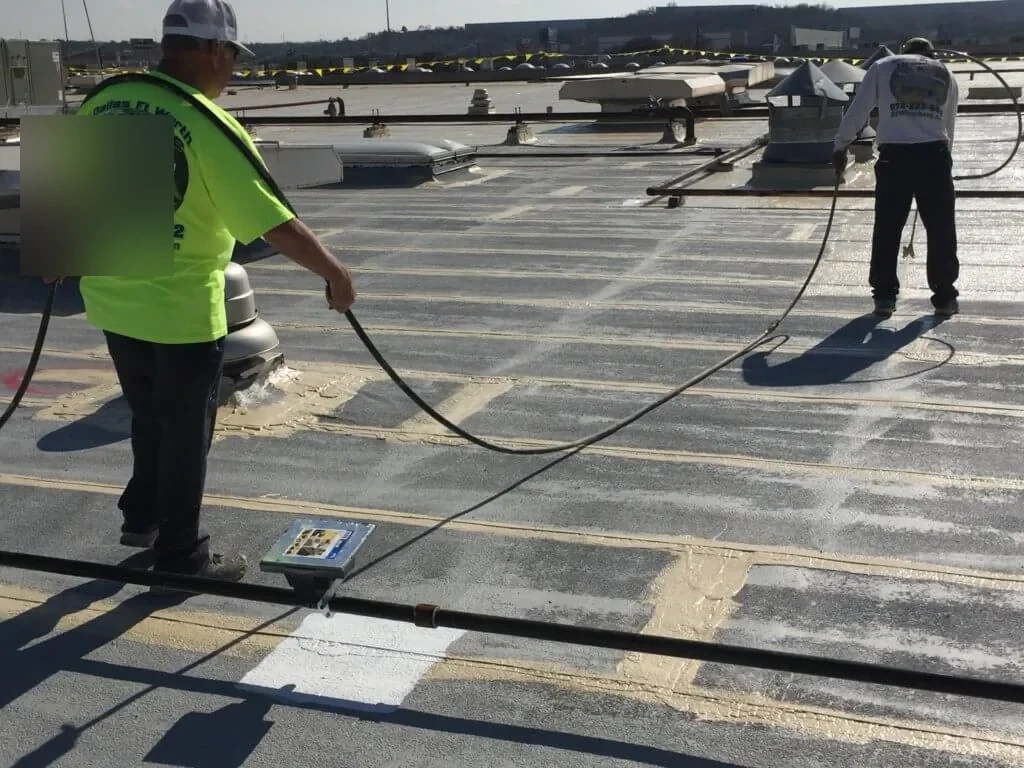
Before an acrylic coating goes on, the roof needs a dry, sound surface and a drainage plan that fits its slope. Clarksville's weather record includes rainfall throughout the year, so an application schedule must account for the surface condition and a secure close-in point. We inspect the existing membrane, coating, seams, penetrations, and drains, then identify repairs and test areas that could change the scope. The local industrial map shows North Park, East Park, and South Park as broad employment districts rather than a single building type. We assess the actual roof and its occupied schedule before deciding whether acrylic restoration is practical.
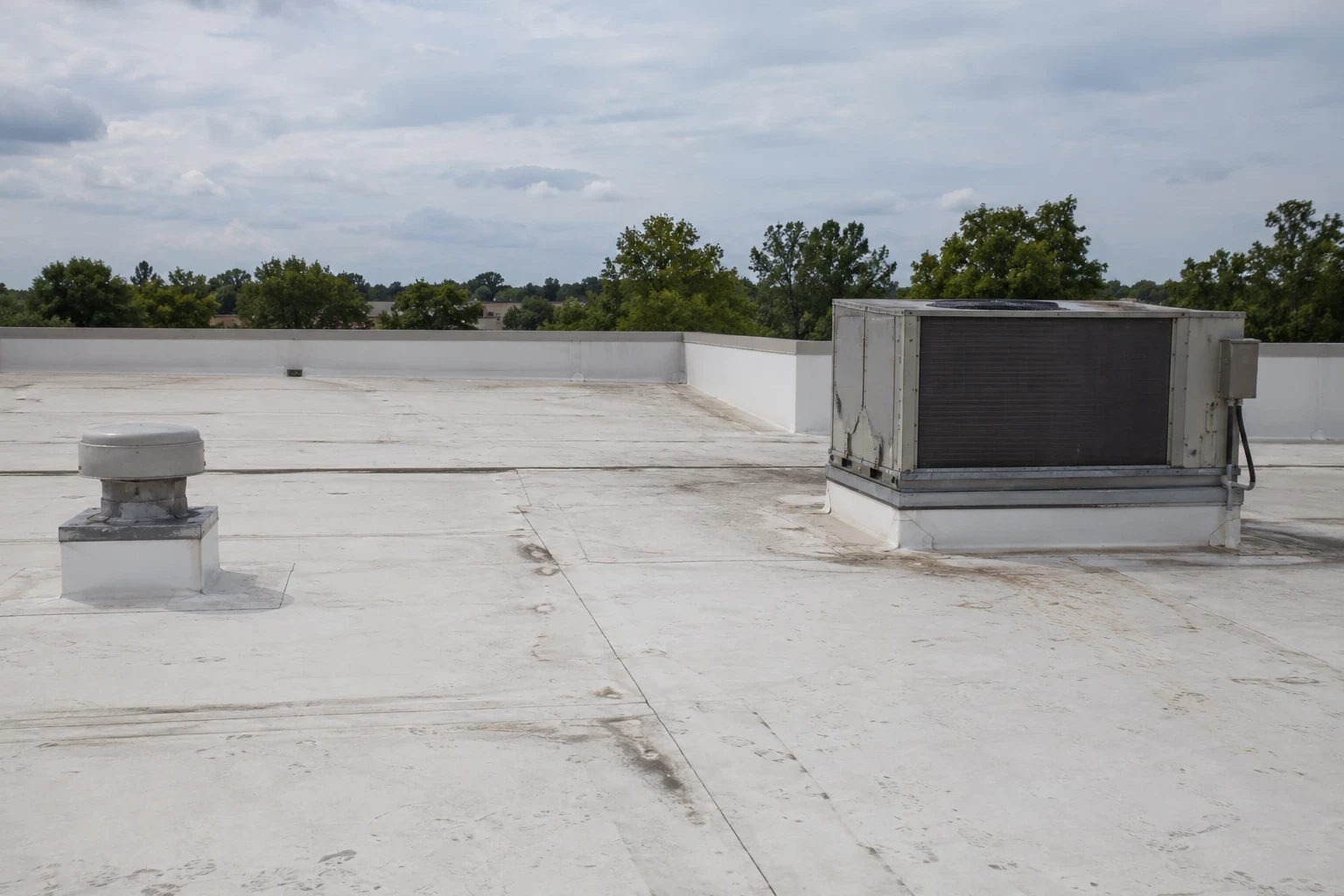
Acrylic coatings are water-based systems whose application depends on suitable weather and a compatible substrate. We identify the existing roof material, surface slope, coating history, and areas where water remains after a storm. Loose material, failed seams, contaminated surfaces, and wet insulation need attention before an application is considered. The inspection marks where cleaning, repairs, primer, or reinforcement may be required. If the roof combines several materials or prior coatings, we identify separate test locations rather than assuming one preparation method fits the whole field.
May's 5.50-inch and November's 4.31-inch long-term precipitation averages in Clarksville make moisture checks and a forecast-based coating window essential. That distribution makes a usable dry window a practical constraint for both preparation and coating. We schedule around the manufacturer's application requirements and observed roof conditions, then set a daily limit that can be protected if rain approaches. A commercial roof inspection maps the substrate and details, while a spray foam roof review applies when the roof profile itself is shaped from foam.
Preparation is the part of coating work that most affects whether a new layer can remain bonded. We remove loose coating, address open seams and flashing defects, and verify that the surface is clean and sufficiently dry. Test patches can show whether adhesion is acceptable and whether the selected primer is appropriate. The report identifies the test location, surface condition, and result. Where an area fails the test, we define the correction rather than carrying the assumption into the full roof.
Clarksville's July and August long-term mean temperatures reach 79.4 and 78.7 degrees Fahrenheit. Those normals are city-level context, not a roof thermometer, yet heat can affect work sequencing and application conditions. We follow product requirements for temperature, humidity, and recoat timing. At a building in one of the mapped East Park or South Park employment areas, roof access and occupied shifts are confirmed with the facility. A photographic condition report preserves the preparation limits and any rejected test area for the next inspection.
Coating across the field is only part of the scope. We inspect roof drains, scuppers, gutters, parapets, penetrations, curbs, and edge metal, then note how the acrylic system will terminate at each. Drain openings need to remain clear and accessible after application. At a flashing, the surface preparation and reinforcement must follow a compatible detail. If standing water or a poor slope appears, we state what correction is included and what requires a separate design or repair. A thin layer cannot replace a missing drain or stabilize a moving substrate.
Clarksville's main thoroughfare list includes Trenton Road/SR 48 and Warfield Boulevard/101st Parkway/SR 374. Those routes orient the city service area, but a local reference does not determine how a particular roof drains. The field inspection traces runoff from each low point to its outlet. A drain and scupper review can separate a blocked outlet from a roof-profile issue. If the coating meets metal coping or gutters, an edge-metal inspection records the tie-in and any corrosion that needs repair first.
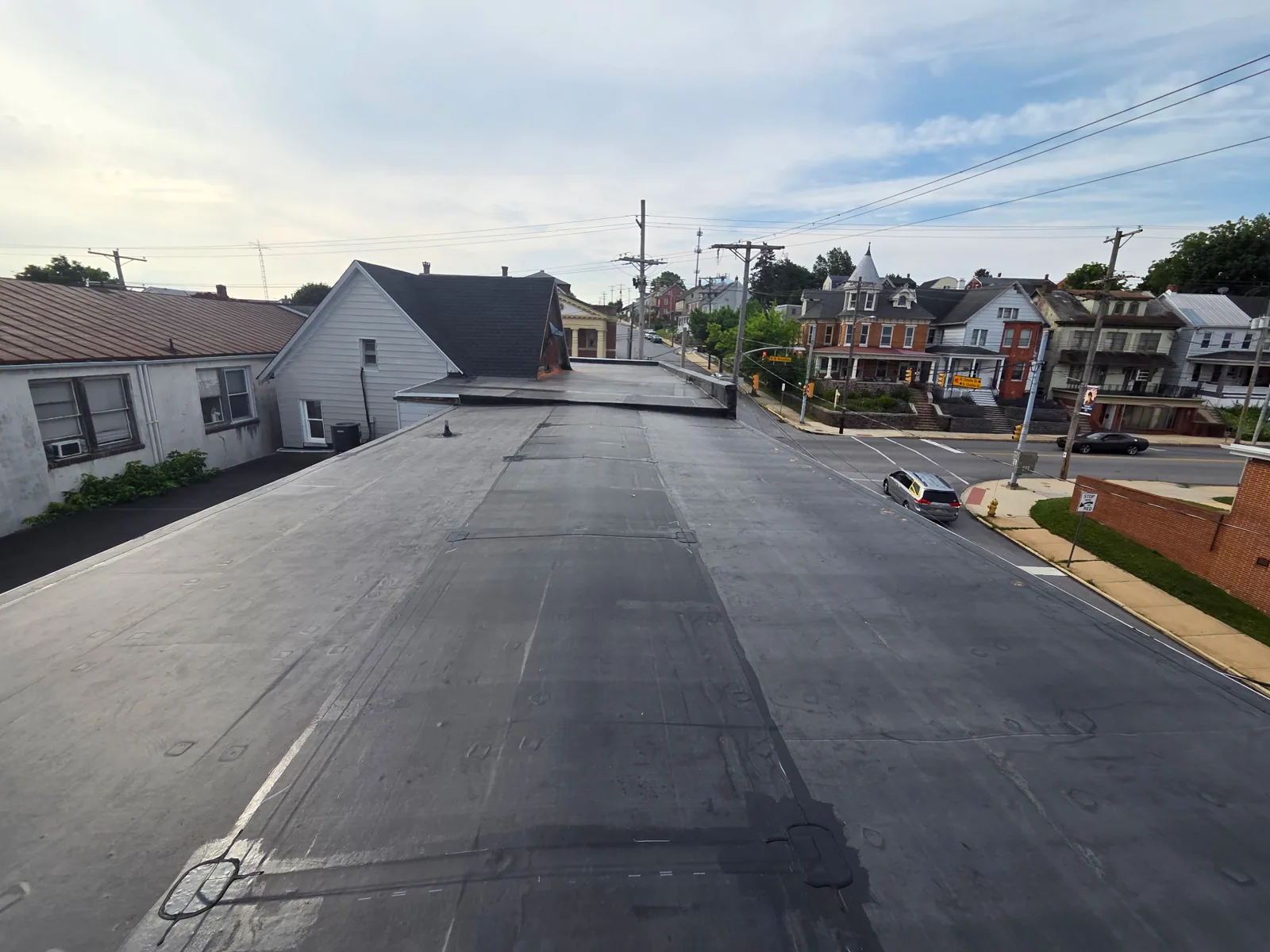
After hail, we inspect the coating for punctures, fractures, exposed substrate, and damage at equipment curbs or other transitions. The review uses a roof map so isolated impact and pre-existing wear are recorded separately. On May 8, 2024, NWS survey and local reports included hail in Clarksville up to an estimated three inches and a two-inch report five miles south-southwest of town; the event page marks the survey information preliminary. Those reports establish a regional event, not damage to a specific property. We document the actual roof and secure any opening that exposes the assembly.
For each marked area, we note whether the coating is split, debonded, or punctured and whether the underlying membrane also needs repair. A patch is prepared to a firm boundary and tied into compatible material. If the substrate is wet or the damage is widespread, the scope may move beyond a coating repair. A hail-damage assessment can document the affected zones, while a coating restoration review determines whether the remaining field is suitable for renewal.
It may be suitable when the existing surface is compatible, the roof drains as intended, and the substrate is dry and sound. We inspect slope, ponding, seams, repairs, and test patches before recommending an application. Conditions that need drainage or membrane repair are addressed in the scope.
Wet substrate, rain, unsuitable temperature or humidity, failed adhesion tests, and unresolved leaks can stop the application. We divide work into protected zones and set a daily boundary. If the weather window closes, the facility receives a status and handback note before work resumes.
Possibly, after cleaning and adhesion testing confirm that the old layer can support the new system. We identify incompatible or loose areas and define their repair before coating proceeds. The test record names the location and preparation used rather than treating the full roof as uniform.
We map punctures, fractures, debonded sections, and any exposed substrate, then inspect the underlying membrane where needed. A regional report does not determine an individual roof's condition. The field record separates observed damage from pre-existing wear and notes where temporary protection is required.
The facility should receive coated-zone photographs, repair and test locations, preparation notes, application record, and drainage observations. We also list conditions requiring follow-up and the next inspection point. This makes later maintenance specific to the roof sections reviewed.
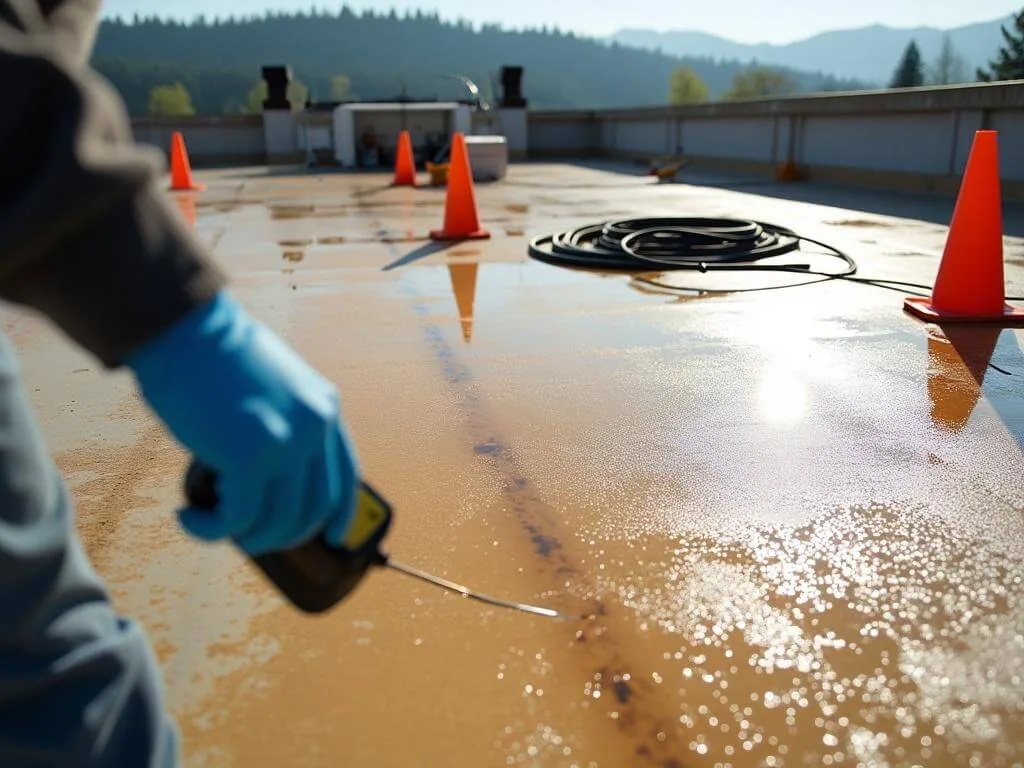
Acrylic restoration can fit a sound roof where slope, moisture, adhesion, and detail conditions support the system. We compare recoat with localized repair, recover, or replacement when the substrate or drainage cannot support coating. Cost drivers include roof preparation, repair area, primer, reinforcement, access, equipment protection, and how many shifts are needed to complete protected zones. The scope states the measured areas and calls out test findings that could change quantities. No application area is assumed from a property map or a visible spot alone.
We close out by roof section with photographs, preparation notes, repair locations, application record, and drainage observations. That information gives the facility a useful comparison at its next inspection. When coating no longer fits, a silicone system review can provide another coating option where the substrate and water exposure allow it. If removal is more appropriate, a replacement plan records tear-off, deck review, insulation, flashing, and a weather sequence. Emergency response is available all day and night, including holidays, to secure a new opening before a permanent scope is ready.
Send the roof history, leak locations, and building schedule. We will inspect the surface, drainage, and details, then document whether acrylic restoration fits the assembly and how occupied work can be sequenced.