
A lifted edge can turn a small repair into an opening that wind and rain can work beneath. Commercial roofs in Clarksville, TN need perimeter details checked against the actual attachment, substrate, and runoff path, not just a bead of sealant at the visible joint. We inspect coping, fascia, edge metal, gutters, and downspouts for movement, loose fasteners, corrosion, open seams, and discharge problems. The repair record identifies the roof edge, what holds it in place, and how the work zone will be protected while the building stays in operation. A property near North Park or along Madison Street receives the same detail-level check, not a district-level assumption.
We trace the edge assembly from membrane termination to metal cleat, fasteners, and backing. A loose cover, open splice, or split sealant joint can allow water behind the visible face. We photograph the defect with a wider roof reference and note whether it repeats along a run or appears at one transition. Where metal has moved, we examine the supporting substrate before tightening or replacing components. A repair should restore the attachment and water-shedding detail, not conceal movement with a surface patch.
An EF3 tornado crossed the Clarksville area in December 2023, with NWS estimating peak winds of 150 mph along its path. That event establishes local severe-wind context; it does not show that a specific roof edge failed. We inspect the actual perimeter and record any loose or displaced components. For related membrane conditions, a storm damage assessment can tie observed openings to repair boundaries, while the Exit 4 Retail District is a broad commercial area, not a claim about any individual building.
Water should leave the roof through a planned outlet and discharge away from the wall and pedestrian areas. We check gutter pitch, hangers, seams, outlet connections, downspouts, and splash points, then look for overflow marks or water staining below. A gutter that holds water may need a slope or support correction; a blocked outlet calls for clearing and a return check. We separate those conditions from membrane ponding so the scope addresses the path that is actually failing.
Clarksville's normal precipitation reaches 5.50 inches in May and 4.31 inches in November, with rain through the year. The figures make runoff planning relevant, but the roof walk determines whether a building's gutter or scupper is obstructed. Where roof drainage joins a primary drain, the scope can include drain and scupper work. On a warehouse or retail building with active receiving, we coordinate lift placement and pedestrian routing with the facility contact before metal lengths or equipment are staged.
When replacement is needed, we measure the run, check the substrate and cleat, and confirm the membrane termination detail before ordering metal. Corners, end dams, expansion joints, and changes in wall height need deliberate transitions; field cuts should not leave an exposed path for water. We remove only the area in the scope, secure the roof at the day's stopping point, and document the attachment and splice locations at handback. If a substrate is deteriorated, we pause for a revised repair decision rather than fastening new metal to an unverified base.
For an occupied building, the edge work can affect roof access, façade activities, and areas below the perimeter. We coordinate lift paths, fall-protection needs, work hours, and daily cleanup with the operating team. A roof inspection can identify where edge movement meets open seams; insulation and cover board work may be relevant when the edge assembly is being rebuilt as part of a larger roof scope. The work record shows which elevation was completed and which remains for another weather window.
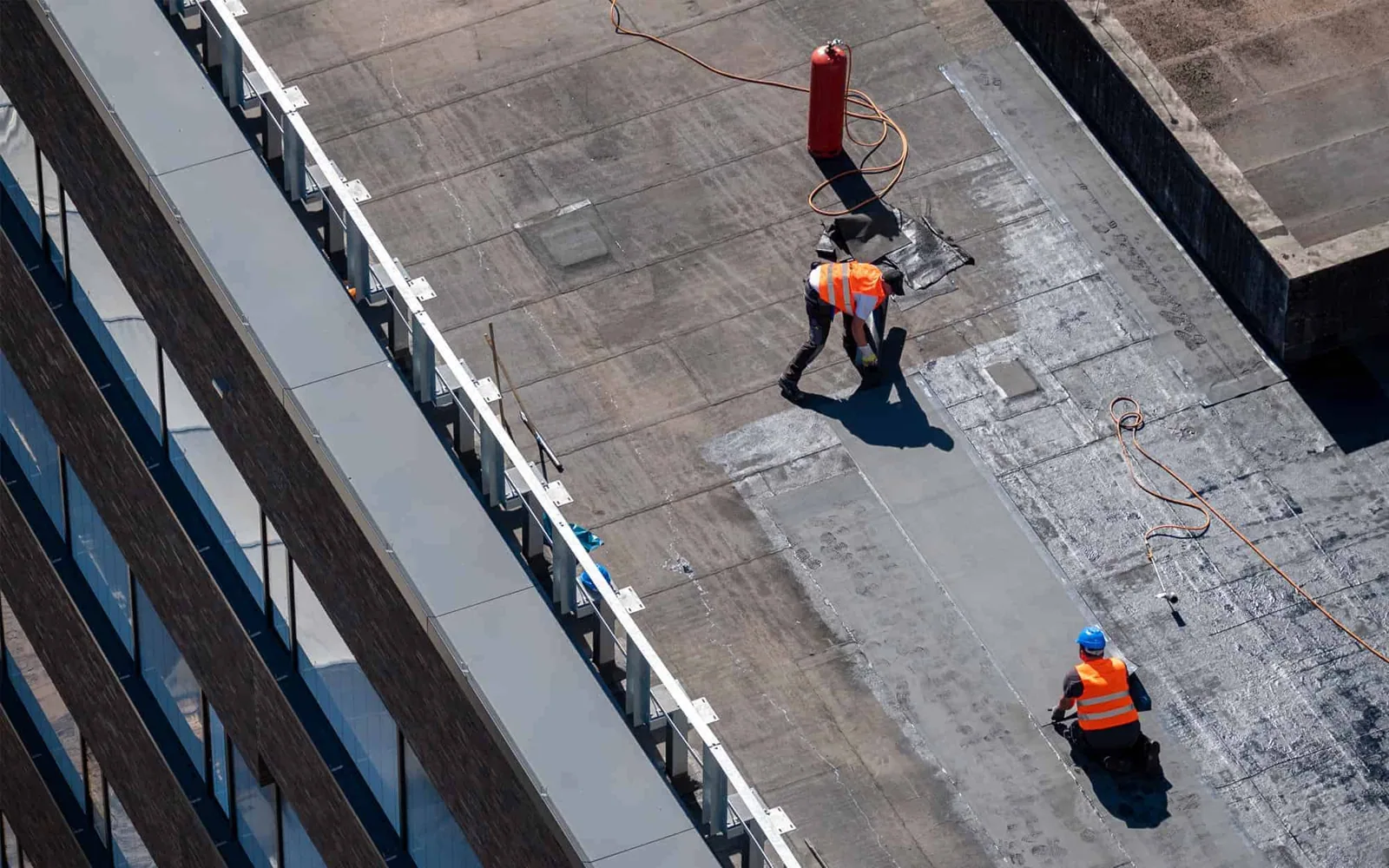
At handback, we verify the attachment, splices, corners, membrane tie-in, and outlets included in the scope, then photograph the completed elevation. The closeout names any unresolved movement or inaccessible discharge point and keeps that work open until access or a separate repair is approved.
After the next rainfall, compare the same labeled splice or outlet; new movement, staining, or overflow is the trigger for another inspection. A condition report with photographs keeps that comparison with the repair record. scheduled maintenance can revisit the perimeter before seasonal weather, while a commercial repair scope can address any separate membrane or drainage defect confirmed during the walk.
At the handback walk, the facility contact can compare the completed elevation with the marked scope and confirm that the protected route below is clear. The crew checks that cut metal, fasteners, and exposed transitions are secured at the agreed stopping point, then identifies any portion deferred because the substrate or outlet could not be verified safely. If backing was not opened, the record says so rather than treating new cover metal as confirmation of the concealed support. A revised condition belongs on a separate approval line, with its location and access requirement stated before work resumes.
Set the next inspection trigger to the detail that remains at issue. After rain, note whether discharge reaches the outlet without overflow or staining at the wall. After strong wind, look for fresh movement at the repaired splice or corner from a safe vantage point, then arrange roof access if the observation warrants it. Record the date, elevation, and visible change; do not expand the original repair unless a new walk confirms a separate defect. This gives the property team a specific handoff: what was secured, what remains open, and what observation should prompt the next visit. Keep the accepted elevation labels and approver for each deferred item in the file, so a later crew can distinguish completed work from a new request without reopening the full perimeter.
We inspect the cover, cleats, fasteners, corners, splices, backing, and membrane termination. A localized open joint may be repairable; repeated movement or deteriorated support can require a longer run of new metal. The scope identifies the affected elevation and substrate condition before material is ordered.
It can have several causes, including blocked outlets, poor pitch, loose hangers, or runoff reaching the gutter faster than it can discharge. We trace water from the roof edge through the outlet and downspout, then separate gutter repair from membrane or drain work. The finding should name the point where flow is interrupted.
We plan around access, noise, lift placement, and pedestrian routes, then isolate the work area from occupied space. Some repairs may need a short shutdown or restricted delivery route. The facility receives the work-zone boundary and daily handback before work starts, and weather sets the safe stopping point.
A follow-up should check the repaired attachment, splice, corner, membrane tie-in, and any gutter outlet in the scope. We use the same elevation labels and photographs to compare condition. Overflow, new staining, or movement should be logged with the date and roof area so the next inspection can focus there.
No. A storm record describes the event, while damage at your building must be observed. We document displaced metal, open transitions, or other visible conditions and distinguish those from old repairs or routine wear. Any inaccessible edge is listed as uninspected until a safe access plan is in place.
Schedule a Clarksville roof walk. We will check attachment, runoff, and transitions, then plan the repair around access and the occupied schedule.