
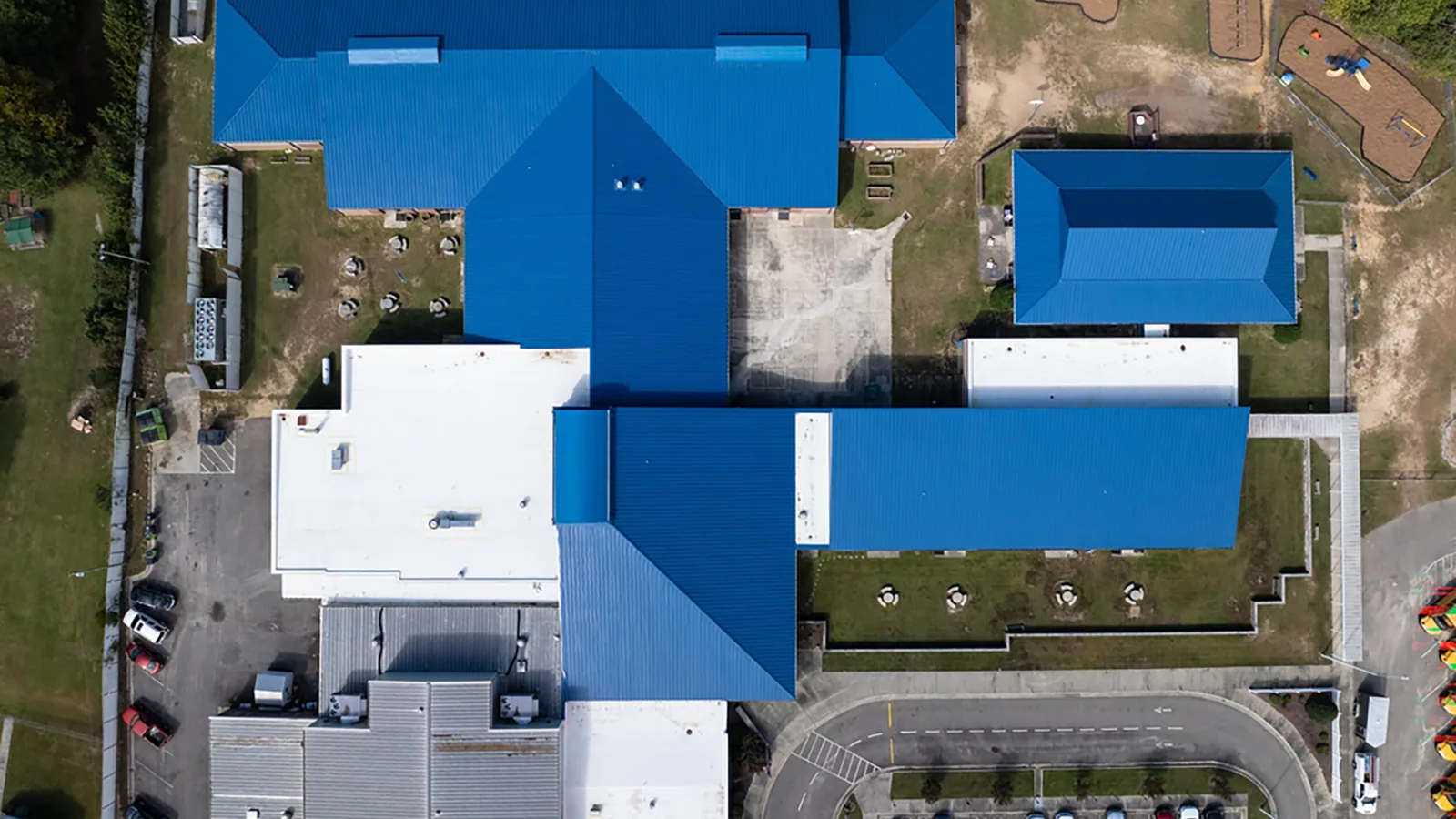
Summer heat and rainfall that continues through the year change when a roof zone can be opened and closed in Clarksville, TN. GAF makes commercial systems that include TPO, PVC, EPDM, asphaltic membranes, insulation, and related accessories, but the name on a submittal does not show what is installed on a particular building. We compare available records with sheet type, attachment, seams, drainage, and edge details. Near North Park or along 101st Airborne Division Parkway, the facility schedule and approach route belong in the same work plan as the membrane finding.
Our roof walk records what can be seen, where access is limited, and what needs a test opening. Then we set a repair boundary or define the questions that must be settled before a larger scope is priced.
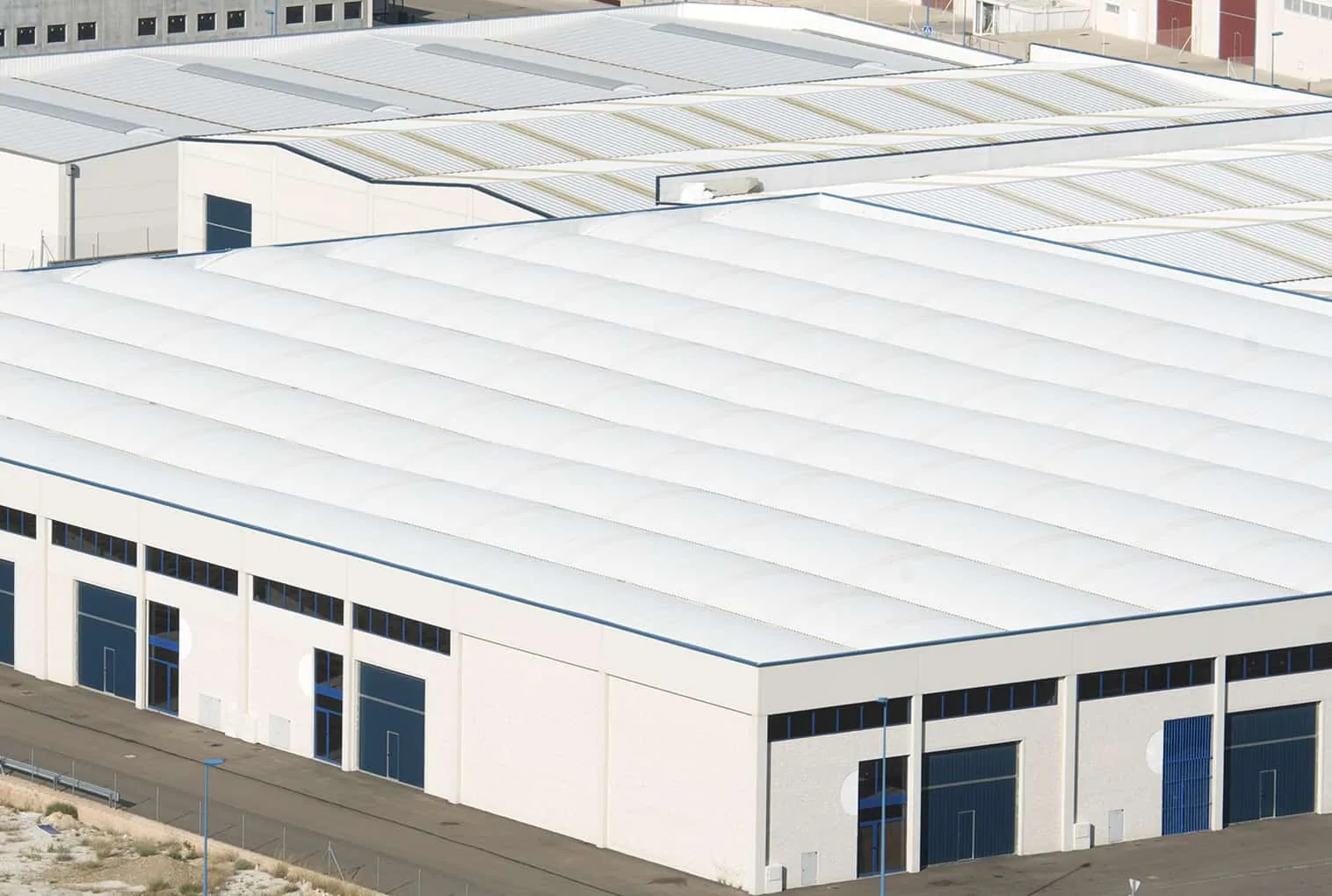
GAF's commercial portfolio covers several roof families, so we start with the actual sheet and supporting assembly rather than treating every GAF label as one system. A thermoplastic membrane uses welded seams; EPDM joints rely on compatible seam products and preparation. Asphaltic assemblies follow different ply and flashing details. We note field membrane, insulation, cover board, attachment, and visible transitions, then compare that record with product documents available to the owner. If a roof section changed during an addition, its boundary is shown separately.
For a Clarksville facility, that distinction matters when warm-season work windows, recurring rainfall, and active occupants affect close-in. A Carlisle SynTec system comparison or Johns Manville system comparison can narrow the alternatives when the existing sheet is confirmed. We do not specify a new membrane from a brand name alone; substrate, drainage, exposure, and perimeter details still control the design.
On a thermoplastic roof, a seam can look continuous while a small portion lacks a sound bond. We inspect accessible laps, probe edges where appropriate, and look closely at corners, T-joints, curb bases, drains, and past repairs. The repair record identifies the length and location of a separation, preparation needed, and the sheet required to rebuild that detail. Surface contamination or an old coating may call for a test patch before a larger repair is set.
Clarksville experienced hail in May 2024, but the event does not diagnose an individual roof. We check for actual punctures, fractures, displaced metal, or damage at rooftop equipment supports. A hail-condition review records findings by roof zone; a seam repair scope can then address a confirmed separation without extending work across sound sheet unnecessarily.
Every membrane decision has to meet the drainage plan already on the roof. We trace water toward drains and scuppers, note low areas and overflow routes, and check whether equipment curbs or previous patches interrupt the path. At each outlet, the scope states whether the clamping ring, flashing, or adjoining field needs work. A GAF accessory does not correct a blocked drain or reverse a slope; those conditions need their own review and may require coordination beyond membrane installation.
Clarksville's road network includes the 101st Airborne Division Parkway and Wilma Rudolph Boulevard, which help describe where facilities approach the city, not a delivery schedule. The site contact confirms gate, vehicle limits, and material drop points. We can link a drain and scupper repair plan to the membrane sequence and reserve a roof walk near the 101st Parkway corridor for the actual property and its access rules.
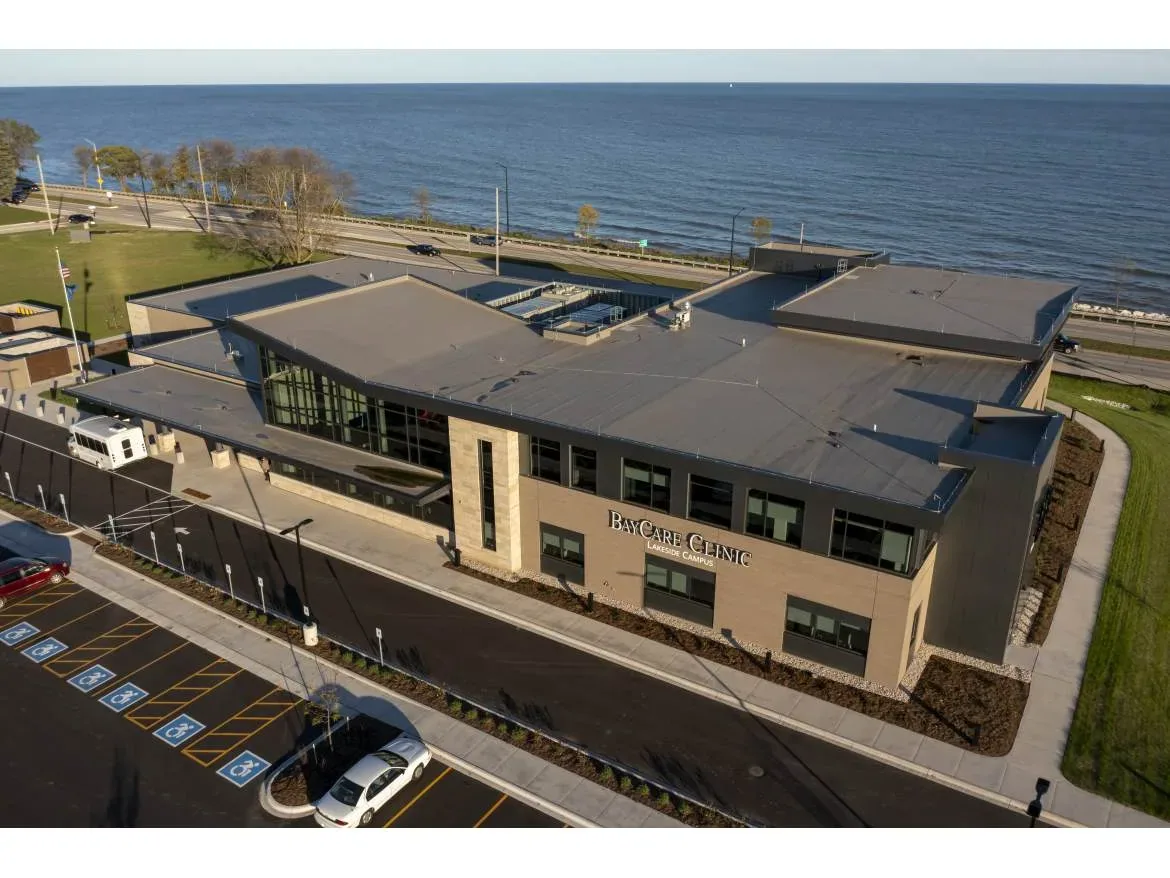
Heat affects crew pace and material handling, while rainfall can interrupt adhesive work, welding, or tear-off before the planned boundary is closed. The daily plan identifies the zone that can be completed and the point where temporary protection must be secure. We coordinate material staging, rooftop equipment, tenant circulation, and any roof access restriction with the facility lead. If a forecast shortens the work window, the crew closes the agreed zone before extending into another section.
That sequence can help industrial properties in North Park and other Clarksville employment districts. Each facility needs its own access plan and roof inspection, since a district location does not reveal a particular membrane or seam condition. A phased occupied-building reroof plan records notifications and handback, while an urgent dry-in response can secure an opening when water is actively entering. Permanent membrane work follows after the roof and schedule are reviewed.
We compare product records and prior closeout documents with the visible sheet, seams, attachment, and flashing. If those sources do not agree, the report marks the roof zone as unconfirmed and identifies what a test or additional record must settle before a replacement system is selected.
A repair can stay local when the surrounding membrane, attachment, and substrate remain suitable. We map the separation, test preparation where needed, and show how the new sheet will tie into the existing field. Broader wet insulation or repeated detail failures can change that comparison.
The work plan names the roof zone, access route, material staging area, and daily dry-in point. We coordinate around occupied hours and equipment that must remain active. Before the crew leaves, the area is protected and the facility receives a handback note tied to the completed boundary.
No. A regional storm event provides context, not a building condition. We inspect the membrane, seams, metal, penetrations, and rooftop supports for observed damage, photograph the findings, and separate confirmed repairs from areas that do not show a change.
We first confirm the membrane, moisture condition, attachment, drainage, and detail compatibility. A recover or restoration scope must address those conditions and the selected system's requirements. If removal exposes a different substrate than expected, the agreed approval point keeps the next step clear.
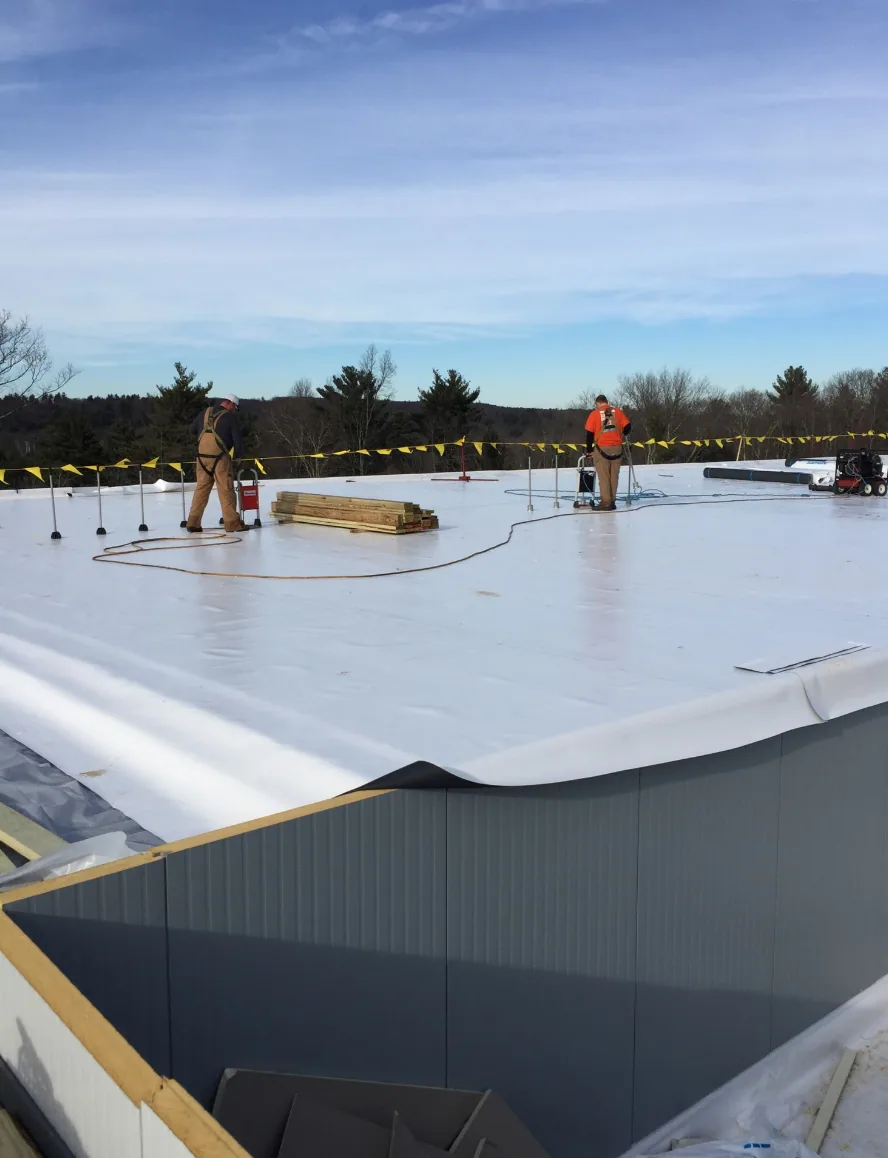
A localized weld repair can be appropriate where the surrounding membrane remains sound and the attachment, insulation, and drainage are not showing a broader pattern. Repeated seam separation, wet materials, widespread surface damage, or mismatched additions may justify comparing repair with recover or replacement. We identify which areas are confirmed, which are concealed, and whether a test opening could change the recommendation. The scope then separates known work from a condition that needs an approval point after removal.
Price and duration depend on removal quantity, edge metal, penetrations, equipment coordination, access, and the protection needed at each shift boundary. For code-sensitive work, the applicable permit path and current project requirements should be confirmed with the jurisdiction and design team. A hands-on roof inspection creates the field record; a capital plan can organize repair and renewal options without treating one roof area as representative of every section.
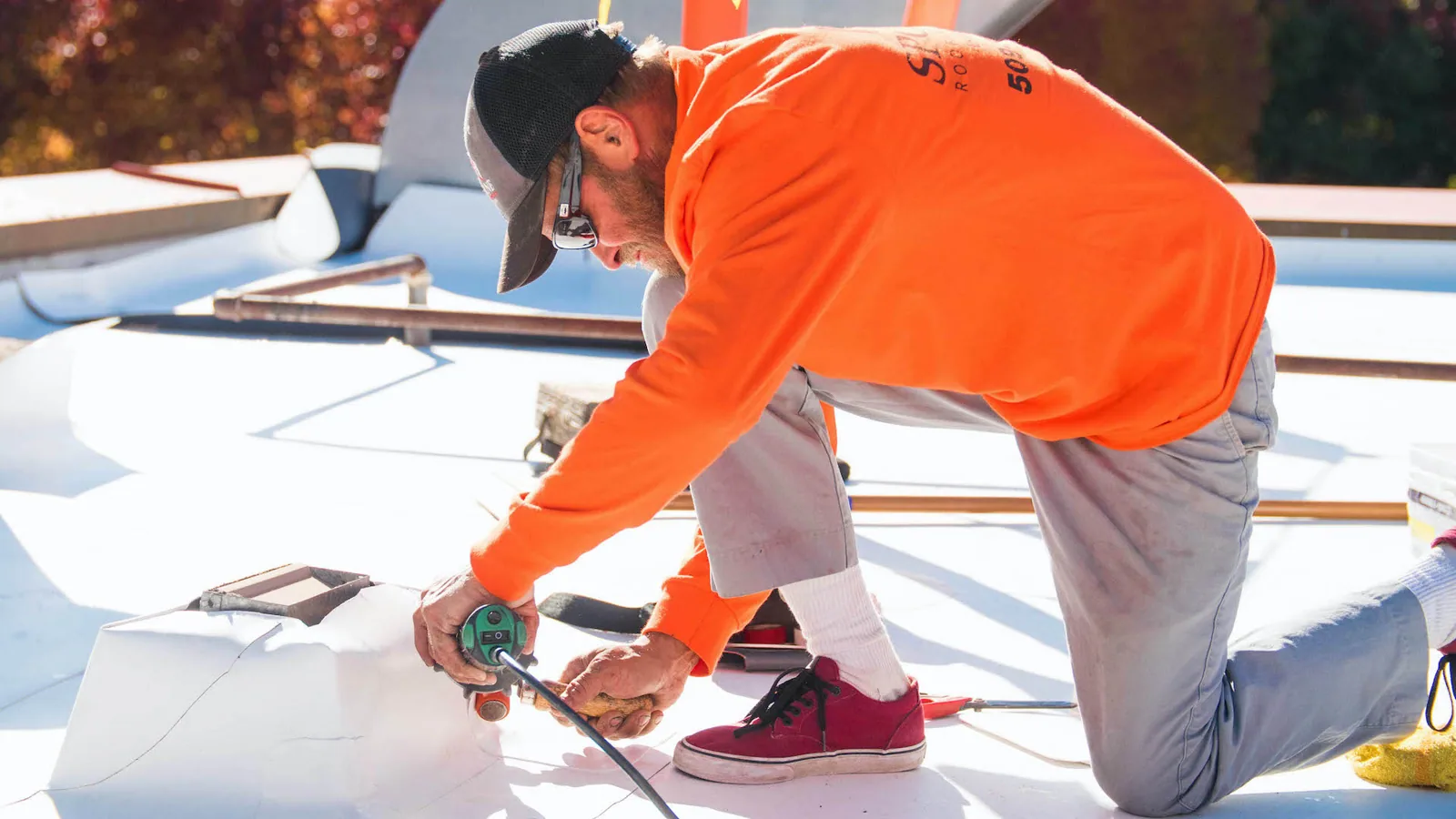
Closeout photographs should show the repaired area, adjoining seam, edge or penetration, and the boundary returned to service. We record the product family where it is known, the preparation and repair performed, any test area, and details that remain outside the approved scope. That file helps the next inspection compare the same roof zone instead of relying on a broad label such as GAF roof or repaired roof. If several systems meet at an addition, the handoff keeps each assembly identified.
Where a manufacturer detail or existing warranty document governs the work, we review the available requirements before changing the assembly. A photo-based condition report can track follow-up items, while scheduled maintenance returns attention to drains, seams, and edge conditions. For a property near the Exit 4 Retail District, the facility still confirms its own work hours and access route before any crew is scheduled.
Share available roof records, observed leak locations, and operating hours. We will document the assembly and details, then outline a repair or renewal sequence with an agreed dry-in point and handback.