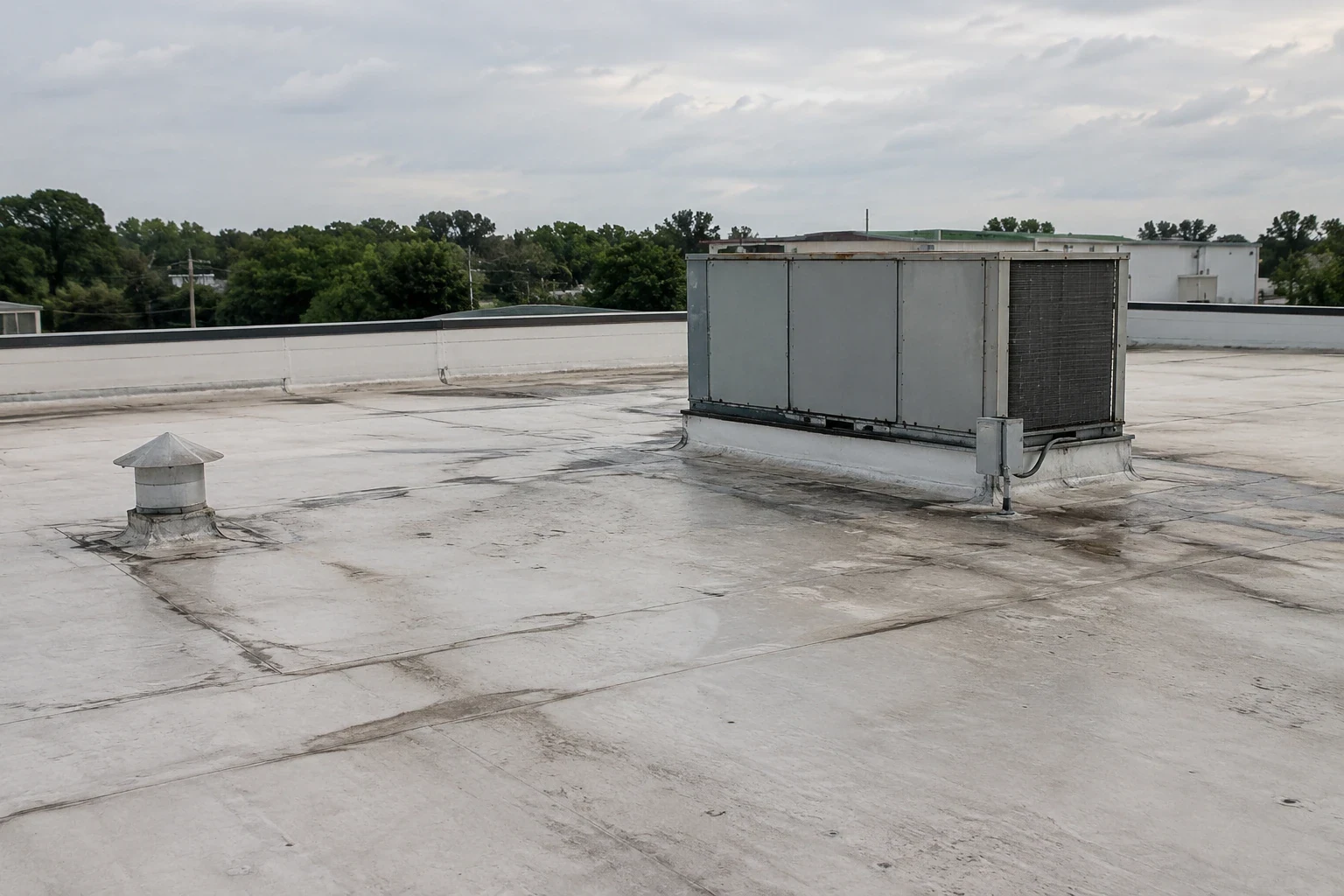
Kitchen exhaust and rooftop equipment can put frequent service traffic around the same flashing where rain is trying to enter. In Clarksville, July and August normals combine mean temperatures near 79 degrees with regular precipitation. That mix makes the repair window and equipment access plan matter at the same time. We inspect the curb, membrane, seams, drains, and perimeter before assigning a repair boundary, then coordinate the work with prep, meal, and delivery periods. A restaurant manager needs to know which entrance or loading path stays open, how the roof opening is secured, and when the area is handed back. The scope should protect food operations without treating every rooftop unit as the cause of a leak.
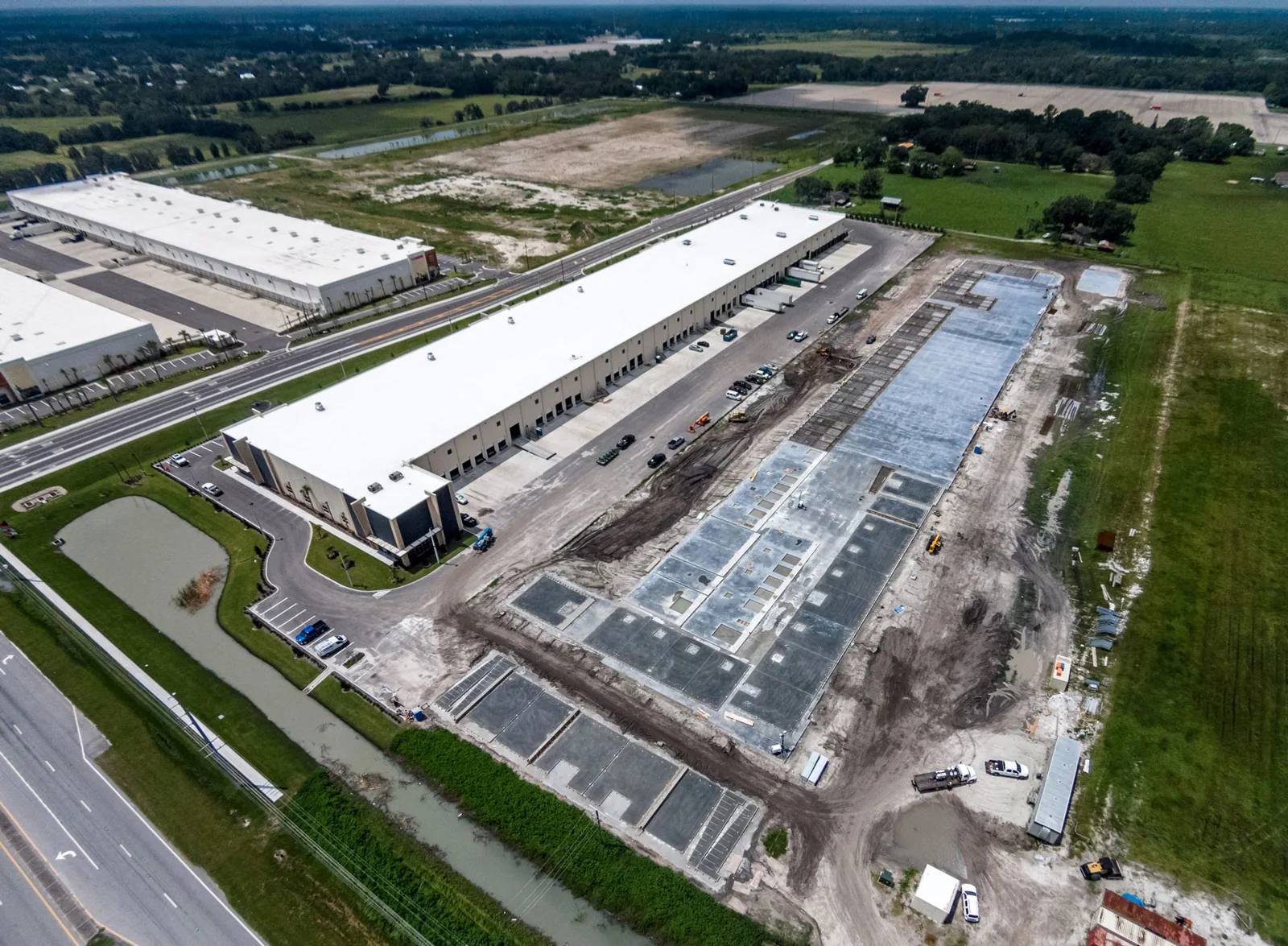
Exhaust fans, duct curbs, conduit supports, and service paths interrupt the roof field. We look for loose flashing, cracked sealant, open seams, fasteners, and water staining around the penetration, then compare that evidence with the interior report. A leak above a kitchen can travel from a roof drain or adjacent seam before it appears in a ceiling. We photograph the unit and roof zone together, record whether the curb is stable, and mark any test needed to confirm concealed moisture.
When a fan curb or equipment support is the visible defect, our curb and support repair focuses on the roof transition and unit access. A commercial leak repair should identify the opening, affected material, and tie-in limit rather than leave the manager with a bead of sealant and no return plan. Keep rooftop service routes clear while the work is underway.
Clarksville's normals show July and August precipitation of 3.64 and 3.17 inches respectively, alongside warm mean temperatures. These figures describe the city climate, not a forecast for the restaurant. For roof work, they support daily checks on the weather window, material handling, and how much roof can be left open between shifts. We set a dry-in point before removal, protect insulation and deck, and confirm that a temporary cover will not interfere with equipment maintenance.
The December 2023 EF3 tornado crossed the Clarksville area, with estimated peak winds of 150 mph. That event makes an inspection of edge details and equipment attachments worthwhile after severe wind; it does not prove damage at a restaurant. If the roof shows displaced metal, loose flashing, or open seams, the repair record should tie each observation to its location. A TPO system review can compare the current assembly and repair detail without assuming the roof needs a full replacement.
Roof access planning includes more than the hatch. We confirm where the lift can sit, how materials arrive, whether a rear delivery route must remain clear, and what parts of the dining area need protection from overhead work. If a repair blocks an entrance or exhaust equipment has to be isolated, the manager needs that timing before the crew starts. The work zone below should be marked, and the day's handback should say when staff can resume normal use.
Clarksville's roadway plan lists 101st Airborne Division Parkway as a public arterial corridor, while Wilma Rudolph Boulevard is among the city's main thoroughfares. These are broad orientation references; they do not establish access or traffic at a particular restaurant. We plan access with the local property contact and its delivery pattern. A phased occupied-building reroof can be useful when a dining room or back-of-house area cannot close for the project. A shopping center roof plan may also account for shared entrances or adjacent tenant routes.
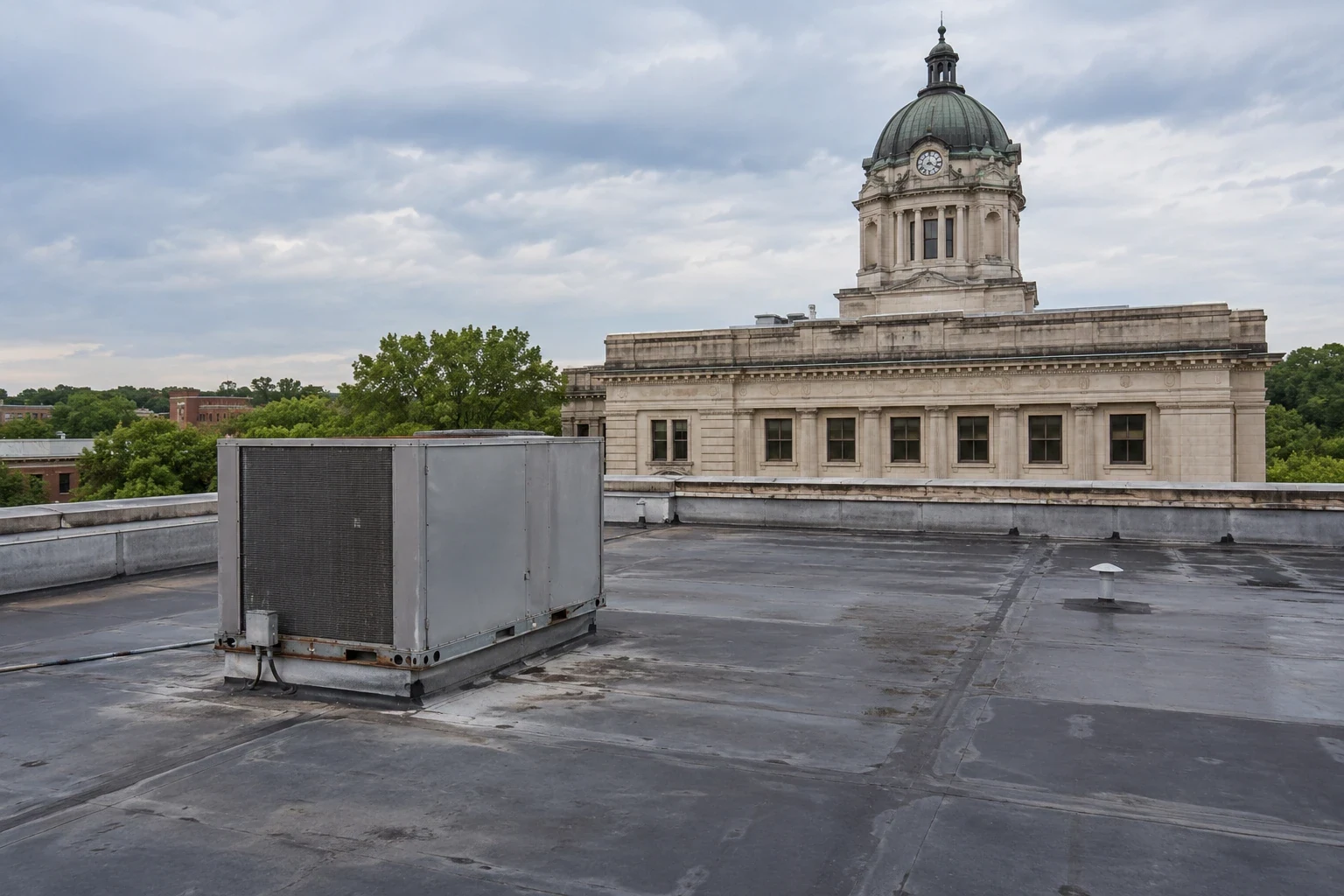
A local repair can make sense when the opening is confirmed, adjacent membrane is sound, and a durable tie-in is accessible. Repeated leaks around several curbs, wet insulation across a roof zone, failed seams, or poor drainage can move the decision toward a broader replacement review. A recover is considered only after checking the existing assembly, attachment, moisture, deck, and code issues. We distinguish what is visible from what needs a test opening, so the owner can compare options from the same evidence.
Price and schedule vary with access, fan or unit resets, duct work, insulation removal, deck repairs, edge metal, debris handling, and protection over active dining or food areas. We list these drivers by roof section, along with who coordinates any equipment shutdown. A drain repair should be evaluated separately when an outlet is the confirmed issue. For a restaurant in a larger property, a grocery roof plan handles different equipment and delivery needs, while a restaurant scope centers on exhaust and service access. A maintenance visit can track the curbs, seams, and drains after the repair.
Yes. Water can travel from a seam, drain, curb, or perimeter detail before it reaches the interior. We inspect the fan transition and nearby roof areas, then compare photographs with the reported timing and room location. If the route is not clear, we identify a moisture test or opening that can answer the question before expanding the repair.
We can plan the work zone around prep, service, deliveries, and equipment access when the roof condition and weather allow. The manager and facility contact set the access route, ground boundary, and return-to-use time. A repair that requires equipment shutdown or a longer dry-in needs its own window rather than being squeezed into a meal break.
We inspect the curb height and flashing, membrane tie-in, support points, conduit path, and any disturbance from the equipment crew. Photos record the transition and surrounding drainage so later water reports can be compared to the work. If the roof was opened for the unit, the handback should state how it was secured and who approved the final seal.
It gives the facilities team a reason to inspect, but not a finding about a particular property. We document displaced edge metal, damaged flashing, open seams, or other visible conditions at the restaurant. The recommendation follows those observations, and any concealed issue is identified for testing rather than assumed.
We match the roof work zone to the room below, set a ground-level boundary, and agree on protection and shift handback with the manager. If debris or an opening could affect food operations, the sequence changes before work begins. The closeout notes any restriction that remains and the next access or inspection point.
At the end of the work period, we identify the repaired roof zone, temporary protection, remaining equipment restrictions, and any route that must stay closed. Photos show the curb or seam before and after the work. The handback names the person to contact if weather changes or a unit needs service before the next scheduled visit. For a restaurant, this record helps the manager coordinate the next prep period without guessing whether a roof area is ready.
After rain, we can revisit the same transition and drainage path shown in the photographs. If a new interior report appears, its time and location can be compared with the earlier work record. A written inspection can establish the next priority without repeating the original repair blindly. When scheduling a Clarksville roof walk, share meal periods, delivery windows, exhaust equipment access, and the location of any active leak. We will document the roof condition and return a sequence that fits the restaurant's operating hours.
Tell us when the kitchen, dining area, and delivery routes are active, and identify any rooftop equipment that needs access. We will inspect the affected details and coordinate a repair window with a clear protection and handback plan.